

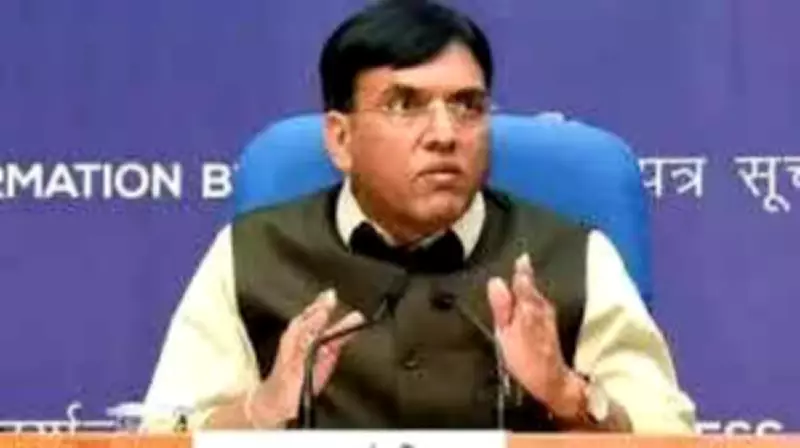
Union Minister Mandaviya Condemns Congress and DMK for Blocking Women's Empowerment Bills
In a sharp critique, Union Minister of Labour and Employment, Youth Affairs and Sports, Mansukh Mandaviya, has accused the Congress and DMK of actively opposing the women's reservation and delimitation bills, claiming their actions reveal a deep-seated resistance to gender equality and political empowerment for women in India.
Allegations of Anti-Equality Stance
Addressing reporters in Madurai on Sunday, Mandaviya asserted that the recent parliamentary proceedings exposed the true intentions of these parties. "This issue is not merely about legislative bills; it is fundamentally about intent," he emphasized. "Why are they so apprehensive about empowering women? Every significant step towards enhancing women's representation appears to unsettle them profoundly."
He suggested that the Congress and DMK are motivated by a desire to maintain power within a limited circle of families and controlled political networks, rather than fostering inclusive governance.

Historical Delays and Current Obstructions
Mandaviya highlighted that for decades, both parties have consistently stalled the women's reservation bill, offering excuses and blocking it at critical junctures. "Now, with the Narendra Modi government introducing the Nari Shakti Vandan Bill, they have once again attempted to obstruct progress," he stated. According to him, this pattern indicates that women's empowerment serves as nothing more than a political slogan for them, lacking genuine commitment.
Misinformation on Delimitation
Regarding the delimitation bill, Mandaviya accused the Congress and DMK of spreading widespread misinformation. "They have effectively denied Tamil Nadu and southern India their fair representation," he claimed. He argued that if these parties truly cared about regional interests, they would have taken action long ago. Instead, he alleged, they use false narratives to mask their political failures and fear that increased seats and greater female participation could undermine their dynastic control.
A Call for Democratic Response
Mandaviya expressed confidence that the women of India will overcome these obstacles. "This struggle will not cease here. Indian women are poised to advance, and no political barrier can halt their progress," he declared. He predicted that women across the nation would deliver a robust democratic rebuke to those attempting to impede their empowerment through the electoral process.
The minister's remarks underscore ongoing tensions in Indian politics over gender representation and regional equity, with the women's reservation bill remaining a contentious issue amid broader debates on political reform and inclusivity.






