

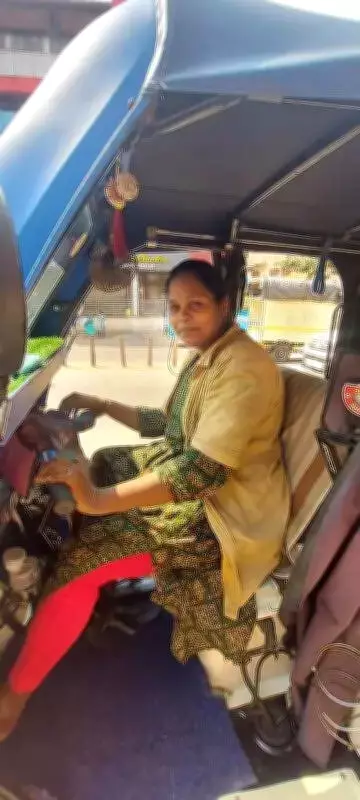
Mangaluru Auto Driver's Daily Struggle Exposes Gap Between Policy and Pavement Reality
As national and Karnataka state debates intensify around women's reservation, workplace rights, and menstrual leave, the daily reality for working women like Sumangala reveals a stark disconnect between policy discussions and ground-level challenges.
The Unseen Face of Women's Empowerment
For 44-year-old Sumangala, an auto driver navigating Mangaluru's streets, empowerment remains an abstract concept rather than a lived reality. The single mother of four children—two in college and two in school—embarks on grueling 12-hour shifts from 9 AM to 7:30 PM daily, driving an electric autorickshaw to sustain her household.
"I have responsibilities. Rent, electricity bill, fees and food. Whenever I feel like giving up, harsh realities remind me to keep going," Sumangala shared, encapsulating the relentless pressure faced by countless working women across India.

From Accident to Adaptation: An Eight-Year Journey
Sumangala's journey into auto driving spans eight years, beginning with a gas-powered autorickshaw used primarily for school transportation. However, a significant accident that required rods to be inserted in both her hands forced a career pivot. The physical limitations made gear-changing difficult, prompting her to sell her old vehicle and transition to an electric rickshaw four years ago.
This shift was facilitated by a 75% subsidy available through a Mahindra showroom scheme, representing one of the few institutional supports she has accessed. Despite having studied up to SSLC level, Sumangala's educational background hasn't translated into easier economic opportunities.
The Hidden Costs of Clean Mobility
While the transition to electric mobility represents environmental progress, it has introduced new financial burdens. Charging costs present a significant challenge: "A full home charge costs around Rs 50 over four hours, while commercial EV charging stations charge Rs 45 for just one hour. So, I try to finish my day's rides before needing a top-up charge," she explained.
This economic calculation forces strategic decisions about when and where to charge, adding another layer of complexity to her already demanding workday.
Market Realities and Strategic Decisions
Business fluctuations further complicate Sumangala's financial stability. During summer vacations, demand decreases significantly, forcing difficult choices about where to wait for passengers. "Waiting at autorickshaw stands in Balmatta, or near hospitals for 15-20 minutes may fetch only a Rs 35 ride. If we wait, battery charge also gets wasted. It is better to keep moving," she noted, highlighting the constant trade-offs between potential earnings and resource conservation.
The Growing But Isolated Community of Women Drivers
Sumangala is part of a small but growing community of approximately five to six women e-rickshaw drivers in Mangaluru, reflecting a gradual increase in women auto drivers across Karnataka. Despite this emerging trend, institutional support remains elusive.
"So far, women empowerment schemes to subsidise or help my business have not reached me yet," Sumangala revealed, pointing to the implementation gap that often separates policy announcements from tangible benefits for women in the informal economy.
Broader Implications for Women's Empowerment Debates
Sumangala's story serves as a powerful reminder that while legislative debates about women's rights capture headlines, the translation of these policies into meaningful change requires addressing the practical challenges faced by women in the workforce. Her experience underscores the need for empowerment initiatives that consider:

- The specific financial pressures of single mothers
- The physical demands and safety concerns of transportation work
- The economic realities of transitioning to cleaner technologies
- The implementation gaps in existing subsidy and support schemes
As Karnataka and India continue discussions about advancing women's rights, stories like Sumangala's provide crucial ground-level perspectives that should inform more effective, inclusive policies reaching beyond urban centers and formal employment sectors to support women across all economic strata.





