

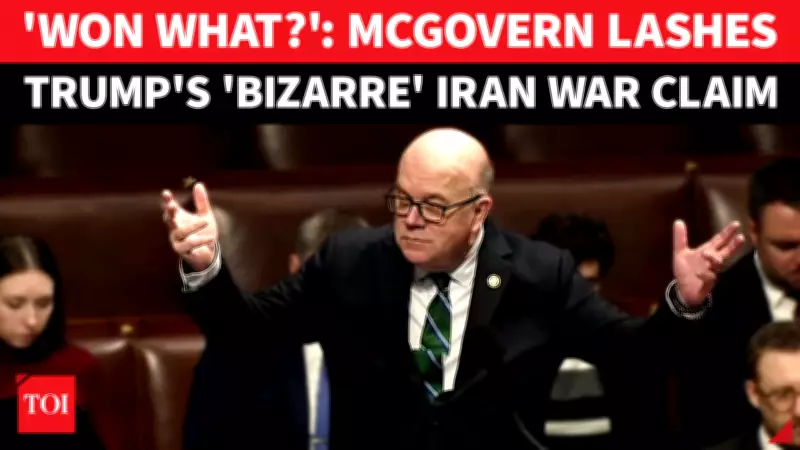
McGovern Blasts Trump's 'Bizarre' Iran War Narrative
In a sharp and direct critique, U.S. Congressman James McGovern has launched a scathing attack on former President Donald Trump over his recent claims regarding the ongoing conflict with Iran. McGovern labeled Trump's statements as "bizarre" and fundamentally misleading, sparking a heated debate about the administration's handling of the volatile situation in the Middle East.
Questioning the Validity of Trump's Claims
Trump has recently suggested that the Iran conflict is effectively "won" and hinted at the possibility of initiating talks to resolve the tensions. However, McGovern has pushed back forcefully against these assertions, raising critical questions about the feasibility and transparency of such diplomatic efforts. "Trump talking to who?" McGovern demanded, highlighting the lack of clarity regarding potential negotiation partners as hostilities with Iran continue to simmer without a clear resolution in sight.
The congressman emphasized that the ground reality remains one of high tension and unpredictability, contradicting Trump's optimistic portrayal. This clash of narratives underscores the deep divisions in how the conflict is being perceived and communicated to the public.

Accusations of Market-Driven Spin
Beyond questioning the substance of Trump's claims, McGovern has leveled a more serious accusation against the U.S. administration. He contends that the narrative being shaped appears primarily aimed at stabilizing financial markets rather than accurately reflecting the complex and dangerous realities on the ground. This strategy, according to McGovern, prioritizes economic perceptions over truthful reporting of an ongoing conflict.
With the Middle East still embroiled in volatility, this approach raises profound concerns about whether the administration is engaging in strategic communication, deliberate spin, or something more concerning. The implications extend beyond politics, touching on issues of national security and public trust.
Broader Context and Regional Instability
The controversy unfolds against a backdrop of persistent instability in the region. Recent developments, such as Iran fortifying strategic locations like Kharg Island and deploying defensive measures, indicate a preparation for prolonged confrontation. Additionally, incidents like missile debris causing casualties in Abu Dhabi have sent shockwaves through the Gulf, further complicating the geopolitical landscape.
International actors, including Russia's alleged provision of drones to Iran and China's indirect involvement, add layers of complexity to the conflict. Meanwhile, groups like Yemen's Houthis have issued stark warnings in support of Iran, illustrating the widening ripple effects of the tensions.
Conclusion: A Call for Transparency and Accountability
McGovern's critique serves as a powerful reminder of the need for transparency and accountability in how conflicts are managed and communicated. As the U.S. administration navigates the delicate balance between diplomatic efforts, military posturing, and economic considerations, the congressman's questions resonate with broader concerns about the integrity of public discourse.
The ongoing debate highlights a critical juncture in U.S. foreign policy, where the lines between strategy, spin, and substantive action are increasingly blurred. With no immediate end to the Iran conflict in sight, the clash of narratives will likely continue to shape both domestic and international perceptions of the crisis.






