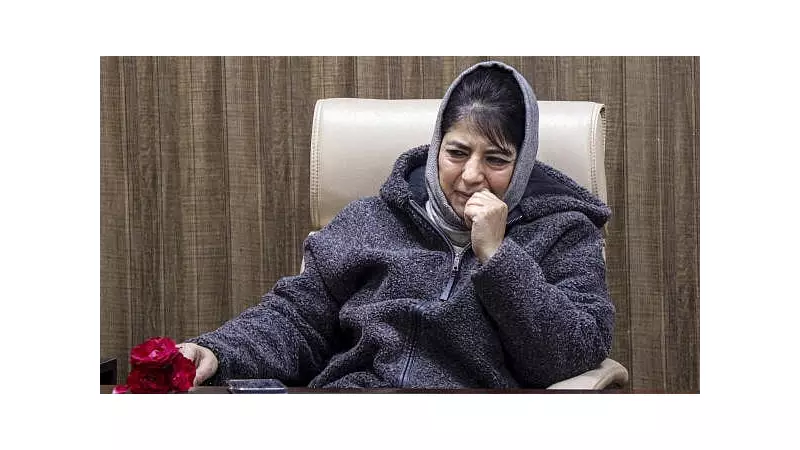
In a sharp political critique, former Jammu and Kashmir Chief Minister Mehbooba Mufti has leveled serious allegations against the Bharatiya Janata Party (BJP), accusing it of maintaining contradictory stances on key issues. Mufti, a prominent leader of the People's Democratic Party (PDP), claimed that BJP leaders have warmly welcomed dignitaries from the Middle East, including Sheikhs, while simultaneously displaying apparent satisfaction over incidents of vandalism at Sufi shrines.
Allegations of Political Hypocrisy and Double Standards
Mehbooba Mufti's remarks highlight what she describes as a deliberate pattern of double standards adopted by the saffron party. According to her, this behavior reflects a strategic inconsistency in BJP's approach to domestic and international matters. The former chief minister emphasized that such actions undermine communal harmony and cultural heritage in regions like Jammu and Kashmir, where Sufi shrines hold significant religious and historical importance.
Context of Middle East Relations and Sufi Shrines
The accusation comes against the backdrop of India's growing diplomatic and economic ties with Middle Eastern nations, where leaders often engage with Sheikhs and other dignitaries to foster bilateral cooperation. However, Mufti pointed out that this outward hospitality contrasts sharply with the party's alleged indifference or even glee towards vandalism targeting Sufi shrines, which are revered sites for many communities in India.

She argued that this duality in behavior not only exposes political hypocrisy but also risks alienating minority groups and damaging social cohesion. The statement has sparked discussions on the BJP's policies regarding religious sites and its broader political strategy in sensitive regions.
Reactions and Implications for Indian Politics
Mufti's comments are likely to resonate in political circles, particularly as they touch on issues of secularism and cultural preservation. The BJP has yet to respond officially to these allegations, but the controversy may influence public perception and electoral dynamics, especially in Jammu and Kashmir and other states with diverse religious demographics.
Observers note that such accusations could fuel debates on the party's commitment to protecting all religious monuments and promoting inclusive governance. As the political landscape evolves, Mufti's critique underscores the ongoing tensions between different ideological factions in Indian politics.
In summary, Mehbooba Mufti's allegations against the BJP highlight a perceived disconnect in its actions, from engaging with international leaders to addressing domestic incidents of vandalism. This development adds to the complex narrative of India's political discourse, with potential ramifications for future policy and inter-community relations.