

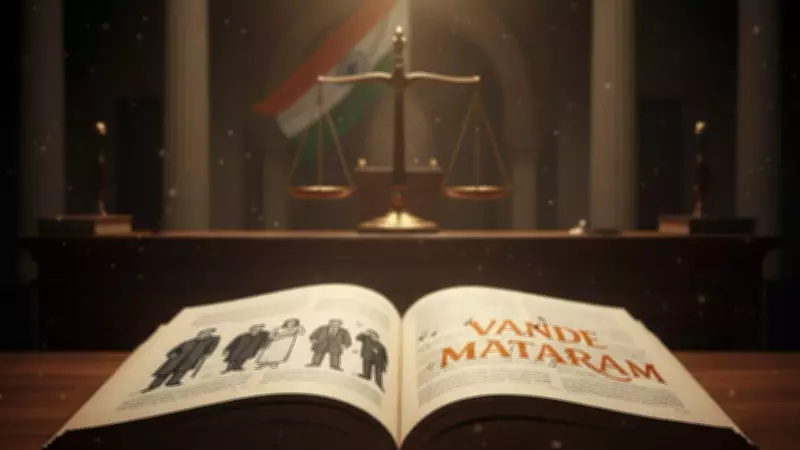
MHA Mandates Full Six Stanzas of Vande Mataram in Official Functions
The Ministry of Home Affairs (MHA) has issued a landmark directive, notifying the first-ever official protocols for singing Vande Mataram, India's national song. According to the notification dated January 28, all six stanzas of the composition must be sung during official functions, marking a significant departure from historical practices.
Breaking with Historical Precedent
This move by the Centre represents a clear break from the position adopted by the Congress leadership starting in 1937. At that time, objections arose from sections of the Muslim community who argued that the song invoked Hindu goddesses, leading to its truncation for official use.
The Indian Express reported that the MHA recently convened a meeting with senior officials from various ministries to discuss framing rules on when and how the national song should be sung, including whether it should accompany the national anthem Jana Gana Mana and if disrespect should incur penalties.

Understanding the Six Stanzas
Vande Mataram, written by Bankim Chandra Chatterjee, consists of six stanzas with distinct themes:
- The first two stanzas poetically describe the beauty and abundance of the motherland.
- The third stanza declares that crores of arms are ready to fight for the nation.
- The fourth stanza emphasizes readiness to wield sharp swords for protection.
- The fifth stanza notes that the motherland's image is carved in every temple and shrine.
- The sixth stanza likens the motherland to Hindu goddesses Durga, Lakshmi, and Saraswati.
Emerging as a rallying cry during the Swadeshi movement (1905–08), the song became deeply intertwined with India's freedom struggle. While the Constituent Assembly granted it equal honor with the national anthem, no compulsory etiquette or legal requirements existed for its recitation until now.
Historical Context and Controversies
According to R K Prabhu's book Bankim Chandra Chatterjee and the Vande Mataram Song, the Congress Working Committee (CWC) adopted a resolution in October 1937. This resolution acknowledged the song's role in the freedom struggle but recommended singing only the first two stanzas at national gatherings, citing religious objections to the later verses.
The resolution stated: "The other stanzas of the song are little known and hardly ever sung. They contain certain allusions and a religious ideology which may not be in keeping with the ideology of other religious groups in India."
In 1950, Rajendra Prasad, as President-elect, announced that Jana Gana Mana would be the national anthem, with Vande Mataram holding equivalent status as the freedom struggle's inspiration, referring specifically to the first two stanzas.
Political Debates and Modern Implications
Prime Minister Narendra Modi, during a Lok Sabha debate on December 8, 2025, criticized the Congress's 1937 decision to truncate the song, alleging it contributed to India's Partition under pressure from Mohammad Ali Jinnah. In response, Congress MP Priyanka Gandhi Vadra defended the move as a collective decision endorsed by national icons like Mahatma Gandhi and Jawaharlal Nehru.
Historian Tanika Sarkar explained that objections to the song were twofold: the later stanzas depict Muslims as adversaries in Chatterjee's novel Anandamath, and the motherland is portrayed as a Hindu goddess, potentially alienating Muslims.
Former Rajya Sabha MP Swapan Dasgupta, in his book Awakening Bharat Mata, argues that the Congress's secular shift allowed Hindu nationalism to claim Vande Mataram as its own. He notes that singing the full song has become customary at RSS and BJP events, symbolizing a broader cultural and political shift.
This new MHA protocol not only standardizes the singing of Vande Mataram but also reignites debates over national identity, secularism, and historical legacy in contemporary India.






