Blueprint to Block BJP? Why an MNS-Shinde Sena Pact Could Echo in BMC Battle
The political landscape in Maharashtra's civic bodies is witnessing significant shifts as the mayoral process unfolds across various municipal corporations. In the Mumbai civic body, the Bharatiya Janata Party and the Shiv Sena are engaged in a tense struggle for control. The recent developments in the Kalyan-Dombivli Municipal Corporation are being closely monitored by political observers, as they could potentially set a precedent for similar battles in other urban centers.
The Kalyan-Dombivli Political Equation
The Maharashtra Navnirman Sena's decision to back the Eknath Shinde-led Shiv Sena in the Kalyan-Dombivli Municipal Corporation has created considerable unease between the MNS and the Shiv Sena (UBT) that contested the recent Brihanmumbai Municipal Corporation polls. The KDMC represents a politically sensitive civic body where Deputy Chief Minister Shinde maintains strong influence and from where the BJP's Maharashtra president Ravindra Chavan originates.
The MNS's move drew sharp reactions from multiple quarters. Shiv Sena (UBT) leaders, including MP Sanjay Raut, called the alliance unacceptable, while senior MNS leader Bala Nandgaonkar expressed personal disagreement with what transpired in Kalyan-Dombivli. Despite these strong reactions, neither have the ties between the MNS and Sena (UBT) completely broken, nor has the support extended by the MNS to the Shinde-led Sena been withdrawn.

The Chain of Events Leading to the Alliance
The alliance formation began well before the nomination stage when the BJP poached several candidates who were expected to contest for the MNS. This left Raj Thackeray's party struggling to field candidates in multiple wards. Simultaneously, the seat-sharing arrangement between the BJP and the Shiv Sena resulted in several Sena leaders being denied tickets as their wards were allotted to the BJP.
With the MNS facing a candidate shortage, it fielded these displaced Sena leaders. The Shiv Sena supported these candidates during the campaign, providing workers and organizational assistance that played a crucial role in their eventual victories. The final seat distribution in the 122-member House saw the BJP winning 50 seats, the Sena securing 53, the MNS obtaining 5, and the Sena (UBT) claiming 11.
Strategic Calculations and Political Survival
Soon after the results, four of the five MNS corporators established contact with the Sena, while some also received approaches from the BJP. Sena leader Rajesh Kadam revealed that three of the five MNS corporators had joined the party shortly before the polls and were keen on making a return. A fourth MNS corporator reportedly expressed interest in joining the Sena since he received substantial help from the party in his contest against the BJP.
The Shinde-led Sena maintained a strategic interest in ensuring that the MNS remained intact and aligned with it. A BJP takeover of the KDMC would have significantly altered the balance within the ruling alliance at a time when mayoral battles are unfolding simultaneously across Maharashtra. Faced with the risk of uncontrolled defections, the MNS leadership moved swiftly. Former MLA Raju Patil briefed party chief Raj Thackeray on the situation, leading to the party's formal announcement of support for the Sena.
Publicly described as a local decision, those involved indicated the move was primarily made to keep the party intact in the KDMC. Sources claimed that Uddhav Thackeray was aware of the situation, adding that four Sena (UBT) corporators were also set to join the Shinde-led party. The decision was driven by concerns over the MNS's own survival and relevance in the civic body, explained a leader. Had four MNS corporators broken away individually, the party would have been reduced to a marginal presence in KDMC, weakening its ability to negotiate or influence decisions in the corporation.
The Mayor's Post and Political Implications
The situation took a dramatic turn on January 22 when a lottery reserved the KDMC Mayor's post for the Scheduled Tribe category. The BJP, despite having 50 corporators, had no Adivasi representatives, effectively leaving the party with no clear route to the Mayor's chair. The MNS, however, possessed one ST corporator: Sheetal Mandhari.

Sources indicated that if the MNS had backed the BJP, Mandhari would have automatically become the BJP-backed Mayor, handing KDMC to the ruling party and giving Chavan a major civic win on his home turf. However, that door appears to be effectively closed following the MNS-Shinde Sena alliance.
Why This Matters for Mumbai's Political Future
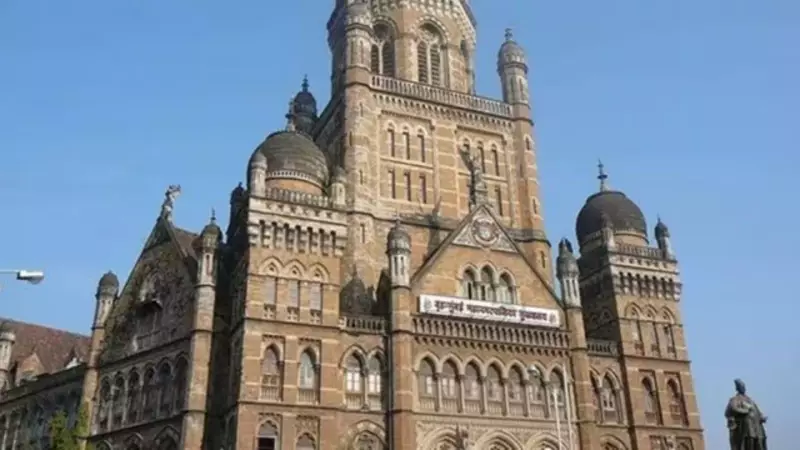
The developments in the KDMC are being closely watched as the mayoral process unfolds across Maharashtra's civic bodies, including the crucial Brihanmumbai Municipal Corporation. In the Mumbai civic body, the BJP and the Sena remain locked in a tense battle for control. Soon after the results were declared, Sena corporators were kept in a city hotel, underlining the intensity of negotiations and the persistent fear of defections.
A BJP mayor in KDMC would have strengthened the party's hand in parallel negotiations in Mumbai, but instead the outcome in Kalyan-Dombivli has allowed Shinde to push back, signaling that numbers alone may not decide mayoral claims when post-poll alignments shift. Mahayuti leaders revealed that friction over whether the mayor's term should be split—including the two-and-a-half-year formula seen in other civic bodies—had added to the tension, making the KDMC a particularly sensitive test case for both parties.
Regional Significance and Political Stakes
The KDMC represents more than just another civic body, as it forms part of Shinde's home turf. His son Shrikant Shinde serves as the MP from Kalyan, and the region has witnessed a long-running tussle between the Shinde camp and the local BJP leadership, particularly Chavan, who has risen to head the state BJP.
For Shinde, controlling the KDMC is crucial to consolidating his hold in the Mumbai Metropolitan Region following the 2022 split. For Shrikant, the civic body represents a key base where the party wants to demonstrate it can run major municipal corporations without conceding space to the BJP. However, the civic body carries equal weight for the BJP as well. The city hosts a sizeable Marathi Brahmin population, representing a core support base for the party.
The BJP views the KDMC as a natural expansion zone, with stakes elevated not just because of Chavan's connection. A BJP mayor in KDMC would have delivered a strong political statement for the state leadership. Political observers are closely monitoring these developments as a possible template for how post-poll alignments may evolve in Mumbai and other major civic bodies, where numbers alone may not decide power and smaller parties or factions could emerge as decisive players in determining political outcomes.