

PM Modi Redefines Leadership in Pariksha Pe Charcha, Stresses on Understanding People
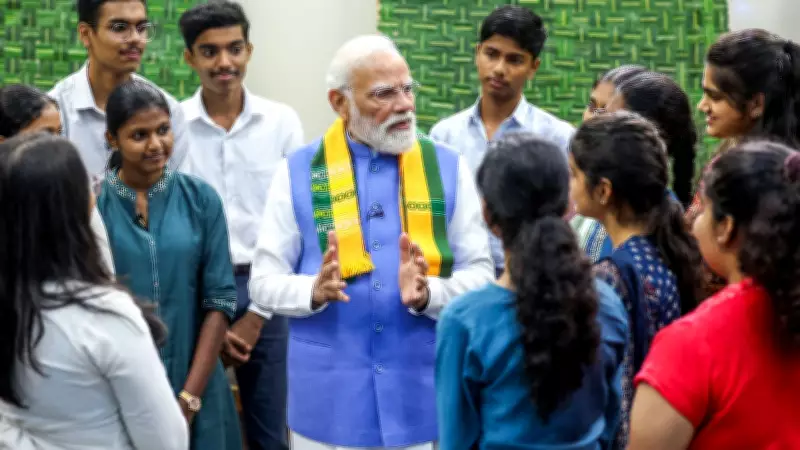
Prime Minister Narendra Modi, in the second episode of the ninth edition of Pariksha Pe Charcha, articulated a profound perspective on leadership, emphasizing that it is not about contesting elections, forming political parties, or delivering speeches, but rather about effectively communicating with and understanding people. This recorded video episode, released on Monday, showcased Modi interacting with students from diverse regions across India, including Coimbatore in Tamil Nadu, Dev Mogra in Gujarat, Raipur in Chhattisgarh, and Guwahati in Assam.
Leadership Rooted in Action and Empathy
In response to a student's query from Raipur on leadership, Modi highlighted that leadership emerges from personal initiative and empathy. "When there’s work, you should decide that irrespective of anybody else acting on it or not, you will. Start with yourself and leadership will automatically arrive," he stated. He further explained that a key quality of a leader is to facilitate understanding rather than impose ideas, necessitating a deep comprehension of the audience. This marks a significant departure from conventional political narratives, focusing on grassroots engagement and mutual respect.
Expanding the Reach of Pariksha Pe Charcha
This year's Pariksha Pe Charcha has introduced a novel format, with the Prime Minister engaging students from various parts of the country for the first time in its nine-year history. The first episode, released last week, featured interactions at Modi's residence in Delhi, while the second episode broadened the scope to include regional participation, fostering a more inclusive dialogue on education and national development.

Students Inquire on Start-ups, Viksit Bharat, and AI
In Coimbatore, students posed questions on start-ups, Viksit Bharat, and Artificial Intelligence (AI). Addressing how students can contribute to the goal of Viksit Bharat by 2047, Modi drew inspiration from Singapore's transformation. "Singapore was once a small fishing village. Now it has become such a big city. Lee Kuan Yew used to say that if we want to become a developed country, we need to make our habits like that of developed countries," he remarked. He advocated for small, actionable steps such as avoiding food waste and promoting 'Vocal for Local' and 'Wed in India' initiatives to bolster national pride and economic self-reliance.
On the topic of AI, Modi encouraged a balanced approach, urging students not to fear technology but to harness it wisely. "In every age, new technology becomes a matter of discussion. We shouldn’t fear anything. But we should try not to become slaves to it... The nature of jobs will change. We need to understand technology, and use it to add value to our work," he advised, highlighting the evolving job landscape and the importance of adaptability.
Tribal Contributions to National Progress
In Dev Mogra, when asked about the role of tribal communities in India's progress, Modi acknowledged their invaluable contributions. "The country has progressed because of tribal communities. Tribal communities safeguard the environment. Several members of tribal communities are in the armed forces. In all fields, there shouldn’t be any difference... there are several sportspersons from Adivasi communities," he said, emphasizing inclusivity and recognition of diverse societal segments.
The episode underscored Modi's commitment to engaging with the youth on critical issues, blending educational guidance with broader national themes. By redefining leadership and addressing contemporary challenges like AI and sustainable development, Pariksha Pe Charcha continues to serve as a platform for inspiring and empowering the next generation of Indians.






