

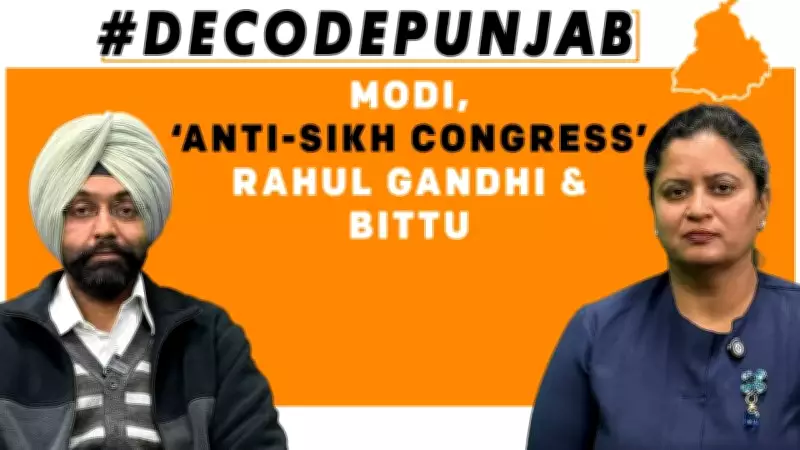
Modi Accuses Congress of Anti-Sikh Stance in Political Clash
Prime Minister Narendra Modi has launched a sharp attack on the Congress party, accusing it of harboring an anti-Sikh stance. This accusation stems from historical grievances related to the 1984 anti-Sikh riots, a dark chapter in India's history that has long been a point of contention in political discourse. Modi's remarks highlight ongoing tensions between the Bharatiya Janata Party (BJP) and the Congress over issues of minority rights and historical accountability.
Historical Context and Political Implications
The 1984 anti-Sikh riots, which occurred following the assassination of then-Prime Minister Indira Gandhi, resulted in widespread violence against the Sikh community. Modi's accusation taps into deep-seated emotions and unresolved justice for many Sikhs, positioning the Congress as historically negligent or complicit. This move is seen as part of a broader strategy to sway Sikh voters and undermine Congress's credibility ahead of upcoming elections.
Key points in Modi's argument include:

- Allegations that Congress leaders failed to prevent or adequately address the riots.
- Claims that the party has not taken sufficient steps to deliver justice to victims over the decades.
- Suggestions that Congress's policies have systematically marginalized Sikh interests.
Rahul Gandhi's 'Traitor Friend' Remark Adds Fuel to Fire
In a related development, Congress leader Rahul Gandhi has stirred controversy by labeling Member of Parliament Ravneet Singh Bittu as a "traitor friend." This remark came during a political rally, where Gandhi criticized Bittu for what he perceived as disloyalty to the party or its ideals. Bittu, a prominent Sikh leader and Congress MP, has been at the center of internal party dynamics, and Gandhi's comment reflects growing factionalism within the Congress.
The term "traitor friend" implies a sense of betrayal, suggesting that Bittu's actions or statements have undermined party unity or principles. This public rebuke could signal deeper rifts within the Congress, especially as it grapples with challenges in maintaining cohesion among its diverse members.
Analysis of the Political Fallout
The dual controversies involving Modi's anti-Sikh accusation and Gandhi's "traitor friend" remark have significant implications for Indian politics. They underscore the intense rivalry between the BJP and Congress, with both parties leveraging emotional and historical issues to gain electoral advantage. For Sikh voters, these developments may influence perceptions of which party truly represents their interests and addresses past injustices.
Potential outcomes include:
- Increased polarization along religious and political lines, particularly in states with substantial Sikh populations like Punjab.
- A renewed focus on historical accountability and minority rights in political debates.
- Possible shifts in voter allegiance as parties attempt to capitalize on these sensitive issues.
As the political landscape heats up, these incidents highlight the ongoing struggle for narrative control and the impact of historical grievances on contemporary politics. Both Modi and Gandhi's statements are likely to resonate in upcoming campaigns, shaping discourse around nationalism, loyalty, and justice.






