PM Modi's Jalandhar Visit Brings Focus to Punjab's Diverse Dalit Politics
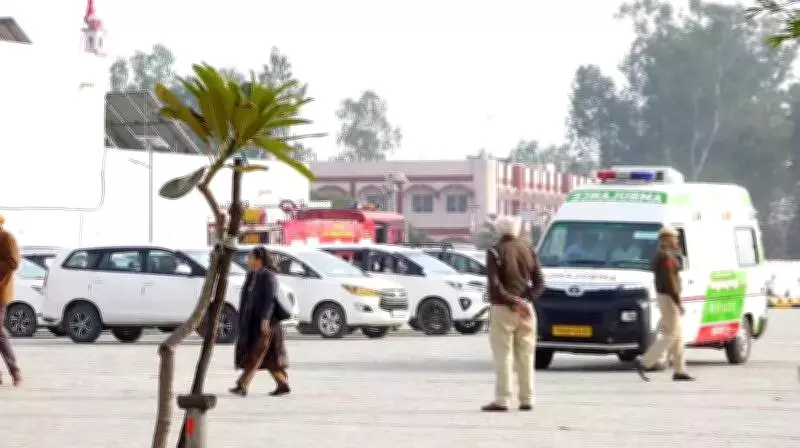
Prime Minister Narendra Modi's scheduled visit to Dera Sachkhand Ballan in Jalandhar on Guru Ravidas Jayanti has generated significant political attention across Punjab. This high-profile engagement with the influential dera and its associated Ravidasia/Ad-dharmi community represents a strategic outreach effort by the Bharatiya Janata Party at a crucial political juncture.
The Political Significance of Dalit Outreach in Punjab
With Dalits constituting approximately one-third of Punjab's population, they represent a vital electoral constituency that political parties actively court. However, the assumption that a single high-profile visit will automatically translate into broad electoral support overlooks a fundamental reality: Punjab's Dalit community is remarkably diverse and politically complex.
The community exhibits multiple layers of social division and identity that significantly influence religious practices, community networks, and political preferences. These divisions manifest in everyday social patterns, where inter-caste marriages among Scheduled Caste groups remain uncommon, and places of worship often reflect distinct identities through separate Ravidas and Valmiki temples serving different community segments.

Understanding the Ravidasia/Ad-dharmi Identity Complexities
The Ravidasia/Ad-dharmi/Ramdasia identity itself contains multiple strands with various sub-identities existing within the broader cluster. Religious self-identification adds another critical layer to this complexity, with community members almost equally divided between Sikh and Hindu identities—a division that profoundly impacts their political orientations.
In Census enumeration, Ad-dharmis are listed separately, while Ravidasia and related names are often grouped with Ramdasia identities. The legacy of the late Kanshi Ram—who reshaped Dalit politics nationally and hailed from a Ramdasia Sikh family—serves as a powerful reminder of how layered and intricate these identities can be in practice.
Historical Political Preferences and Shifting Alignments
Traditionally, the Ad-dharmi/Ravidasia community has been viewed as a Congress support base, though Kanshi Ram's political rise dramatically altered this landscape, making the Bahujan Samaj Party a major preference for substantial community sections. The Shiromani Akali Dal has maintained some support among Ramdasia Sikhs, particularly during Parkash Singh Badal's tenure from 2007 to 2012, when the party attempted to expand its reach through leadership outreach and welfare measures.
Voting behavior patterns reveal clear trends: whenever the BSP appeared electorally competitive, community sections tended to tilt sharply in its favor. This was evident in the 2019 parliamentary election when the BSP's Jalandhar candidate, in alliance with the Punjab Democratic Alliance, polled 2.04 lakh votes. However, in 2024, as narratives about potential constitutional changes gained traction, a significant voter segment appeared to shift toward the Congress, with the same candidate's tally reportedly falling to 64,941 votes.
Opposition to BJP as a Unifying Factor
Despite internal differences in religious practice, the community has largely remained averse to Hindutva politics over time. Intellectuals, writers, and activists from this social segment have often been among the most prominent voices articulating Dalit resistance to Hindutva narratives in Punjab.
Ironically, in the last decade, opposition to the BJP or decisions of the central government created moments of unity among Punjab's Scheduled Castes. This unity was visible in 2018 when SC groups across identities rallied during the Bharat bandh protesting perceived dilution of provisions in the SC/ST (Prevention of Atrocities) Act following a Supreme Court ruling. The political messaging during those protests carried a strong anti-BJP edge.
A similar sentiment resurfaced during the 2024 Lok Sabha elections, when widespread apprehensions among Dalit voters about potential constitutional changes if the BJP returned to power appeared to influence voting patterns against the saffron party.

Dera Ballan's Influence and Its Limitations
Dera Sachkhand Ballan's strength lies in its deep influence among a particular section—primarily the Ad-dharmi/Ravidasia segment with Hindu religious identity in the Doaba region. However, its appeal has not spread evenly across all related sub-identities, and it has not gained comparable traction among Ramdasia Sikhs.
The demographic picture, as reflected in 2011 Census data, helps explain why a single outreach event may resonate unevenly across community segments:
- Of the total 10.17 lakh Ad-dharmis, approximately 9.12 lakh were recorded as Hindus, 86,000 as Sikhs, and 18,778 as Buddhists
- Of 20.78 lakh Ramdasia/Ravidasia and related identities, 6.29 lakh were recorded as Hindus, 14.43 lakh as Sikhs, and 5,896 as Buddhists
Dominance Within the Dalit Political Space
Within Punjab's broader Scheduled Caste landscape, the Ravidasia/Ad-dharmi/Ramdasia cluster is often perceived as dominant in Dalit discourse and political space. Beyond numerical strength—together forming a substantial portion of the SC population when sub-identities are combined—this cluster is also viewed as relatively better positioned in terms of education and economic status compared to other major SC groups, particularly Mazhabi Sikhs/Balmikis, who constitute another significant community segment.
Prime Minister Modi's visit to Dera Sachkhand Ballan therefore represents more than a simple political gesture—it engages with a complex web of identity, religion, and political calculation that continues to shape Punjab's electoral landscape in profound ways.