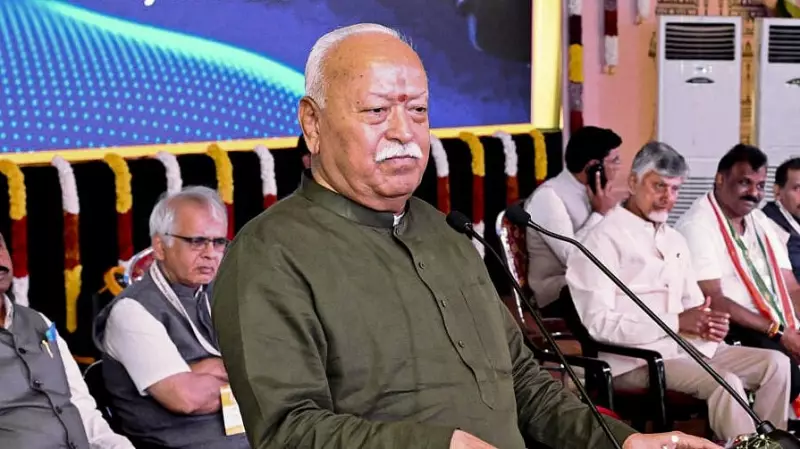
In a significant address, Rashtriya Swayamsevak Sangh (RSS) chief Mohan Bhagwat has called upon the Hindu community to play a pivotal role in establishing India as a 'vishwa guru' (world teacher) for the welfare of the entire world. His remarks, delivered on 28 December 2025, outlined a vision where India's civilizational wisdom guides global progress.
A Call for Global Leadership and Responsibility
Mohan Bhagwat emphasized that the concept of 'vishwa guru' is not about dominance but about responsible leadership and sharing knowledge for universal well-being. He stated that the inherent values and philosophical depth of Hindu thought provide a strong foundation for India to offer solutions to contemporary global challenges. This role, according to him, is a duty that comes with the nation's ancient heritage.
Ethical Imperative in the Age of Technology
A crucial part of Bhagwat's address focused on the modern tool of technology. He issued a clear caution about its direction, arguing that human intellect must master technology for the world's welfare, not let technology master humanity. He stressed the need for an ethical framework where technological advancement is consciously directed towards positive, life-affirming goals, preventing its misuse for destructive or divisive purposes.

This perspective places a significant onus on scientists, innovators, and policymakers to align technological development with broader humanistic and ecological values, a stance seen as increasingly relevant in debates surrounding artificial intelligence and digital governance.
The Path Forward: Internal Strength and External Contribution
Analysts view Bhagwat's speech as a two-pronged message. Firstly, it is an internal call for the Hindu community to consolidate and deepen its understanding of its own principles. Secondly, it projects these principles outward as a contribution to global discourse on peace, sustainability, and ethical living. The vision suggests that India's rise on the world stage should be intrinsically linked to its ability to provide moral and spiritual guidance, complementing economic and political growth.
The call to become a 'vishwa guru' reiterates a long-standing theme in certain strands of Indian thought, which sees the country's destiny as a benevolent guide for humanity, leveraging its rich history of pluralism and philosophical inquiry.