Mother of Deaf-Mute Rape Survivor in Mamata Banerjee's Historic 1993 Protest Passes Away at 91
Felani Basak, the mother of a deaf-and-mute rape survivor whose case propelled Mamata Banerjee into a dramatic 1993 protest at Writers' Buildings, died at her home in Fulia on Monday. She was 91 years old.
A Pivotal Moment in Bengal's Political History
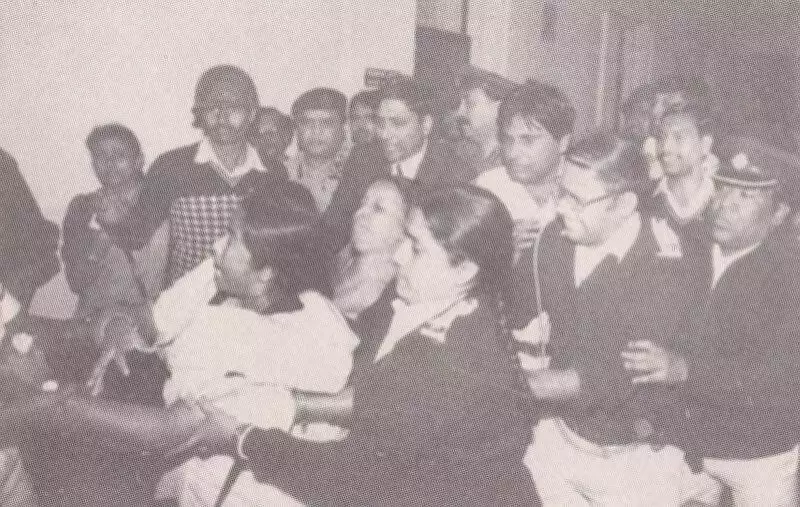
The incident in 1993, where Banerjee—then a Union minister—was forcibly dragged by her hair from the state government headquarters, became a defining moment in her evolution as a fiery opposition leader. This protest ultimately paved her path to becoming the Chief Minister of West Bengal 18 years later.
Felani's daughter, Dipali, had allegedly been raped by a neighbor, who was a CPM worker, in 1992. Dipali tragically died from a snakebite in 2009.

Political Figures Recall the Protest and Maintain Ties
Santipur MLA Braja Kishor Goswami shared that he personally met Felani every year on the Ashtami of Durga Puja. "Throughout the year, our party workers kept track of her health. In the last several months, her condition worsened, but she could still recognise me," he stated. Goswami visited her home after learning of her death and assured the family that her last rites would be their responsibility.
Sobhandeb Chattopadhyay, the current Minister for Parliamentary Affairs and Agriculture, vividly recalled accompanying Banerjee to Writers' Buildings along with Felani and Dipali. "Mamata Banerjee was then the Union Minister of State for HRD, Youth Affairs and Sports, and Women and Child Development in the Narasimha Rao government. We reached Writers' Buildings around 2:30 PM and wanted to meet Buddhadeb Bhattacharjee," he said.
The Confrontation and Aftermath
After Bhattacharjee refused to meet them, they sat in front of his chamber. "We pleaded through Bhattacharjee's secretary, explaining that this was a case of rape involving a deaf-and-mute girl and we sought justice for her. But Bhattacharjee, along with then-CM Jyoti Basu, appeared adamant about not meeting us," Chattopadhyay recounted.
Police were soon summoned, and the situation escalated. "We were physically lifted by the policemen; they even pulled her by the hair. As Banerjee tried to resist, her sari was torn while the police dragged her down the stairs. We were taken to Lal Bazar and placed in the central lock-up," he added.
Around midnight, they were forced out of Lal Bazar. As their followers gathered at the gate, police lathi-charged, leaving both Banerjee and Chattopadhyay badly injured. Banerjee then marched towards the Gandhi statue on Mayo Road to stage a sit-in demonstration.
A Promise Fulfilled
Chattopadhyay noted that the Chief Minister wrote about this incident in her book. That day, Banerjee vowed she would only enter the state secretariat again as Chief Minister—a promise she fulfilled 18 years later when she assumed office in 2011.
The passing of Felani Basak marks the end of a chapter linked to one of West Bengal's most iconic political protests, underscoring the personal stories behind major historical events.