

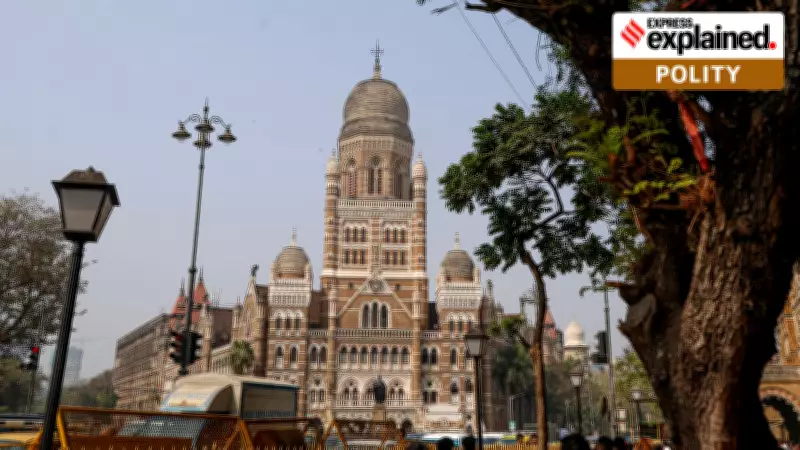
Mumbai's Mayor: A Figurehead in India's Richest Municipal Corporation
In Mumbai, the mayor and deputy mayor are elected among the 227 corporators during the first general meeting after the Brihanmumbai Municipal Corporation (BMC) elections. This process is outlined under Section 37 of the Mumbai Municipal Corporation (MMC) Act. The office of the mayor is reserved by rotation for categories including Scheduled Castes, Scheduled Tribes, Women, and Backward Classes.
The Ceremonial Role of Mumbai's Mayor
Mumbai's mayor holds the title of the city's 'First Citizen' but has a largely ceremonial role in governance. Elected by and among the corporators, the mayor presides over house operations of the BMC, India's wealthiest municipal body. However, real executive and administrative power rests with the municipal commissioner, an IAS officer appointed by the state government.
According to the 2024 Urban Governance Index report by the Praja Foundation, mayors in Maharashtra's municipal corporations are among the least empowered in India, scoring zero out of 25 on empowerment metrics. This highlights significant disparities in mayoral powers across different states.

Responsibilities and Historical Context
Once elected, the mayor oversees deliberations in the civic house and represents Mumbai by welcoming foreign dignitaries and VVIPs. Since 1999, the mayor's term has been set at 2.5 years under the MMC Act of 1888. Typically, the party with the most corporators secures the mayor's seat, with candidates often chosen for their cross-party goodwill to ensure smooth house functioning.
The MMC Act, originally the City of Bombay Municipal Act of 1888, established three authorities: the municipal corporation, standing committee, and municipal commissioner. It vested all executive powers in the commissioner, who sets agendas, prepares budgets, and controls staff appointments and transfers. In contrast, the mayor lacks authority over civic staff or major decisions.
Sanjay Patil, a political researcher, describes Mumbai's municipal structure as a 'commissioner system,' noting that British colonial administration designed it to retain control through the commissioner. Despite approximately 150 amendments to the MMC Act over decades, its core ethos remains unchanged, keeping power centralized.
Comparative Analysis with Other Indian Cities
Mumbai's mayor is not alone in having nominal powers; mayors in Delhi, Chennai, Chandigarh, Goa, Ahmedabad, and Shimla also lack executive authority and cannot chair cabinets or appoint standing committee chairs. However, in cities like Kolkata, Agartala, Guwahati, and Raipur, mayors lead 'mayor-in-council' committees that function like local cabinets, with members holding portfolios and departmental heads reporting to them.
In Thiruvananthapuram, the mayor even has executive authority over the commissioner. Additionally, citizens in Bihar, Haryana, Jharkhand's Ranchi, and Bhopal directly elect their mayors, unlike in Mumbai. Milind Mhaske, CEO of Praja Foundation, points out that while mayors in some cities have more control, municipal bodies like those in Kerala or Agartala often have limited administrative reach compared to the BMC's extensive powers over city works.
Attempts at Reform and Current Realities
Historically, there was a brief period in 1998 when the mayor gained more executive power under a proposal by former Chief Minister Manohar Joshi, but this was quickly withdrawn due to concerns over irregularities. Today, the municipal commissioner continues to wield all executive powers, a legacy of British rule that experts say allows the ruling state party to maintain control over the BMC.
This system underscores a broader trend in urban governance where ceremonial roles persist despite reforms, impacting local democracy and administrative efficiency in India's metropolitan centers.






