

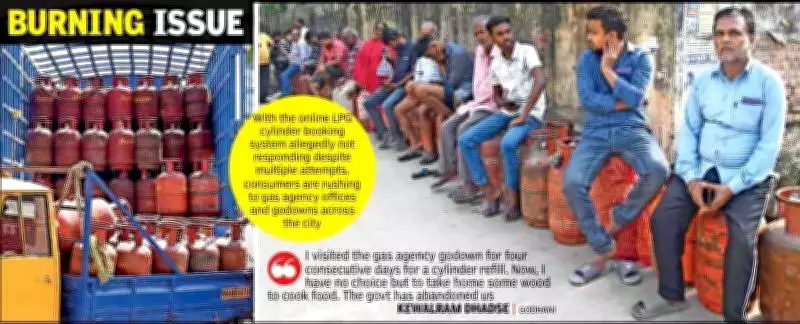
Nagpur's LPG Crisis Enters Second Week with No Relief in Sight
The ongoing LPG crisis in Nagpur has now entered its second week, with no signs of abatement as the situation continues to severely impact a wide spectrum of the population. From commercial consumers such as hoteliers and restaurateurs to ordinary households, the shortage is creating widespread disruption and frustration across the city.
Government Claims vs. Citizen Reality
While government officials and the district administration maintain there is no shortage of domestic LPG cylinders, thousands of citizens tell a starkly different story. They report being unable to book refills due to persistent "system failures" in the mandatory online booking portal. This technological bottleneck has left many without access to essential cooking fuel.
"I visited the gas agency godown for the last four consecutive days as the LPG cylinder at my house is empty," said Kewalram Dhadse, a daily wage worker from Godhani. "Now, I have no choice but to take some wood to cook food. The government has abandoned us and no one cares how we live."

From Commercial to Domestic: A Crisis Snowballs
The crisis initially began last week with a shortage of commercial LPG cylinders, which are primarily used by hotels, restaurants, messes, and other establishments in the hospitality sector. The irregular supply severely affected daily operations, forcing many eateries to adopt alternative arrangements to keep their kitchens functional.
However, what started as a commercial cylinder shortage has now snowballed into a much larger problem, directly affecting domestic consumers as well. Despite authorities claiming domestic cylinders are available, the mandatory online booking system has become a critical failure point.
Long Queues and Growing Frustration
As a direct result of the system failures, large crowds of citizens are now seen rushing to gas agency offices and godowns across Nagpur. They stand in long queues for hours—often under scorching heat—in the desperate hope of getting their bookings processed manually.
Many citizens report attempting to book cylinders online for several consecutive days, only to have the system repeatedly fail to process their requests. Booking numbers remain non-operational, adding to the public's distress.
The growing frustration has led to frequent quarrels between citizens and gas agency employees. "Incidents of quarrels with gas agency staff are increasing as many citizens are not able to book a cylinder online, which was made mandatory," said a gas agency owner. "An incident of gas cylinder theft was also reported. This growing frustration among citizens can lead to untoward incidents."
Hospitality Industry Forced to Innovate
Meanwhile, the hospitality industry continues to struggle intensely with the shortage of commercial cylinders. Several restaurant owners say they have been forced to innovate and adapt radically to keep their kitchens operational, often resorting to cutting down their menus significantly.
Samar Das, a hotelier, detailed his proactive measures: "I bought multiple electric cooktops and induction stoves from Delhi to continue operations," he said. "However, many small restaurants have shifted to chullahs (traditional wood-fired stoves), and almost all restaurants cut their menus, hoping that the crisis would come to an end."
For larger establishments, the shortage has necessitated a complete rethink of kitchen operations. Angadh Arora, owner of a star hotel in Nagpur, explained his establishment's strategy: "I minimised my establishment's LPG usage and started rationing it," said Arora. "I also shifted to ready-to-cook items, like boiled dal or chana, which take much time in traditional cooking. The taste is also not affected, as only raw material is used, and other tadkas and everything are done at the hotel."

A Dual Problem with No Easy Solution
While restaurants are slowly finding ways to adjust to the shortage of commercial cylinders, domestic consumers say they have little choice but to wait helplessly. With citizens standing in long queues for hours just to book a refill, and restaurants struggling to manage their kitchens through innovation and rationing, the LPG crisis has now evolved into a dual problem.
It simultaneously cripples both local businesses and household kitchens across Nagpur, highlighting systemic failures in supply chain management and digital infrastructure. The city remains in a state of limbo, awaiting a resolution that seems increasingly distant as the crisis stretches into its second week.





