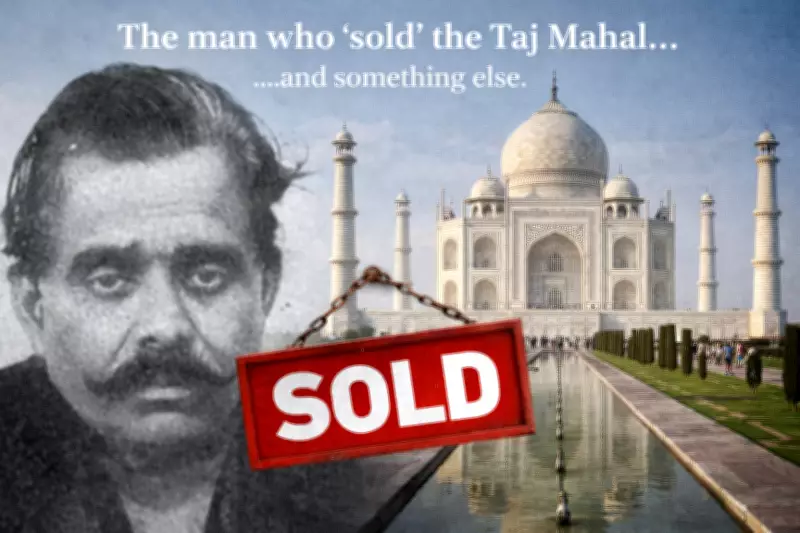
Natwarlal: The Master of Deception Who Became a Legend
Long before digital scams and phishing emails dominated headlines, India witnessed a trickster so extraordinary that his name became synonymous with deception. Mithilesh Kumar Srivastava, better known as Natwarlal, was not merely a criminal but a phenomenon who blurred the lines between audacity and mythology. Decades after his disappearance, stories about him continue to circulate like folklore, blending crime history with urban legend.
The Making of a Master Manipulator
Born in 1912 in Bangra village, Bihar, Srivastava did not begin life as an outlaw. By most accounts, he was intelligent, observant, and academically capable. He studied law and commerce, developing a deep understanding of paperwork, signatures, and bureaucratic systems—skills that would later form the foundation of his infamous career. What truly set him apart was not brute force but psychological brilliance: he understood people, authority, and trust better than most.
Natwarlal's early scams are believed to have started with forged signatures and small financial frauds. Biographical accounts suggest he first discovered his talent after successfully imitating a neighbor's signature, revealing how easily systems built on trust could be manipulated. From there, his ambitions grew rapidly. He studied how officials behaved, how paperwork created legitimacy, and how confidence itself functioned as authority. In an era when documents were rarely verified instantly, appearance often replaced proof, and Natwarlal understood this better than anyone.

When Deception Became Performance
As his confidence grew, so did his ambition. By the 1950s and 1960s, Natwarlal had transformed into one of India's most elusive con artists, operating under dozens of aliases. He impersonated senior government officers, wealthy businessmen, and influential bureaucrats with startling ease. Accounts of his life frequently mention a boast he repeated during custody interactions: that no prison could hold him for long. Whether exaggerated or not, this claim reflected a pattern—he escaped police custody multiple times, often through manipulation rather than force. Each escape strengthened his legend, turning criminal pursuit into theatrical drama.
Selling India's Monuments
Natwarlal's most astonishing exploits pushed him into national folklore. According to widely documented accounts, he allegedly "sold" iconic Indian landmarks, including the Taj Mahal, the Red Fort, Rashtrapati Bhavan, and even Parliament House, to unsuspecting buyers, many of them foreign visitors unfamiliar with Indian bureaucracy. Using forged documents bearing fabricated government seals and signatures, he convinced victims they were part of confidential, high-level transactions. The scale of the lie itself became his greatest weapon. Few people imagined anyone would dare fabricate something so outrageous, and that disbelief worked in his favor. His scams revealed a deeper truth: authority, when convincingly performed, rarely invites scrutiny.
Winning Trust Before Stealing It
Unlike conventional criminals, Natwarlal relied almost entirely on persuasion. He rarely used threats or violence, choosing instead to build trust through confidence, authority, and conversation. Those who studied his methods often noted that his greatest weapon was not forgery alone but his ability to make people believe they were part of something exclusive and legitimate. Beyond headline-grabbing stories of monuments and disguises, many of his schemes relied on slow, carefully constructed credibility.
One of his recurring methods involved opening multiple bank accounts in a city under the name of a fictitious company. He would rent an office designed to project success, complete with expensive furniture and efficient secretarial staff, creating the impression of a thriving business. Over time, he cultivated personal relationships with bank managers, socializing and earning their confidence. Once trust had been firmly established, he requested large overdrafts against his accounts. By the time approvals came through, the businessman they believed they knew had quietly disappeared.

According to statements attributed to Mithilesh Kumar Srivastava in archival interview accounts, he maintained that he never forced anyone to give him money and believed people approached him willingly, often convinced enough to come to him with folded hands. In his own understanding of his actions, deception was not aggression but intellect, a test of perception rather than power. He saw himself less as a thief and more as a man exploiting human assumptions, a performer playing roles society was already prepared to believe.
The Great Escape Artist
Over decades, Natwarlal accumulated prison sentences that collectively exceeded a century. Yet confinement rarely lasted. Disguises, persuasion, and psychological manipulation repeatedly helped him evade custody. One account frequently cited in police recollections illustrates the audacity of his methods. According to police sources, Natwarlal often relied on manipulation rather than force to secure his escapes. In one instance, he reportedly offered a prison guard ₹10,000 to assist him. The guard agreed, only to later discover that while the notes on the outside of the bundle were genuine, the rest were merely pieces of paper. Even in escape, deception remained his signature tactic.
Police records also describe him operating under more than 50 identities during his lifetime. Each arrest only expanded his reputation, transforming him from a criminal into a mythic figure. His final disappearance in 1996 added the last layer of mystery. While being transported under police supervision for medical treatment, he vanished near New Delhi Railway Station. After that, confirmed sightings ceased. Even reports of his death remained disputed, an ending eerily consistent with a life defined by illusion.
Mastering the Art of Transformation
Stories surrounding Natwarlal often emphasize a philosophy attributed to him: that understanding human behavior mattered far more than money itself. Those who interacted with him described a man who closely observed speech patterns, confidence levels, and social hierarchies, studying how people responded to authority and certainty. His greatest skill was not forgery alone but transformation. He understood that people placed trust in uniforms, titles, and confidence long before they questioned authenticity. By carefully performing legitimacy, he was able to step into identities that others accepted without hesitation, turning perception itself into his most powerful tool.
Villain, Folk Hero, or Something In Between?
In parts of rural Bihar, Natwarlal was remembered with surprising affection. Local lore portrayed him as a Robin Hood–like figure who occasionally helped villagers financially. Whether exaggerated or not, these stories contributed to his mythological status. Over time, his name entered everyday vocabulary. Calling someone "a Natwarlal" became shorthand for clever deception. Films and fictional characters borrowed freely from his legend, cementing his place in popular culture.
A Legacy Larger Than Crime
Today, in an age dominated by digital scams, Natwarlal's story feels strikingly modern. Without technology, he mastered the psychological principles that still drive fraud: urgency, authority, and trust. He remains difficult to categorize. Criminal, performer, social manipulator, or misunderstood strategist—each label captures only part of the truth. And perhaps that ambiguity explains why his story refuses to fade. The man who allegedly sold India's greatest monuments ultimately sold something even bigger: an illusion so powerful that history itself still debates where fact ends and legend begins.