

Activist Neelam Azad Returns to Haryana Village After 27 Months in Custody
Neelam Azad, the activist who gained international attention for a security breach and protest inside India's Parliament, has finally returned to her native village in Haryana. This homecoming comes after more than two years spent in legal custody and under state-mandated supervision, marking a significant personal and legal milestone.
End of a Long Legal Ordeal
Azad arrived at Ghaso Khurd on Monday, concluding a period of 27 months since she was initially booked under the stringent Unlawful Activities (Prevention) Act (UAPA). Although the Delhi High Court granted her bail several days ago, she was only allowed to return home this week following a fresh court order that finalized her release conditions.
Her journey back involved 17 months of incarceration in Delhi's Tihar Jail, followed by an additional nine months of restricted movement. During this latter phase, she was required to report to a police station every alternate day, severely limiting her freedom and daily activities.

Warm Welcome from Local Communities
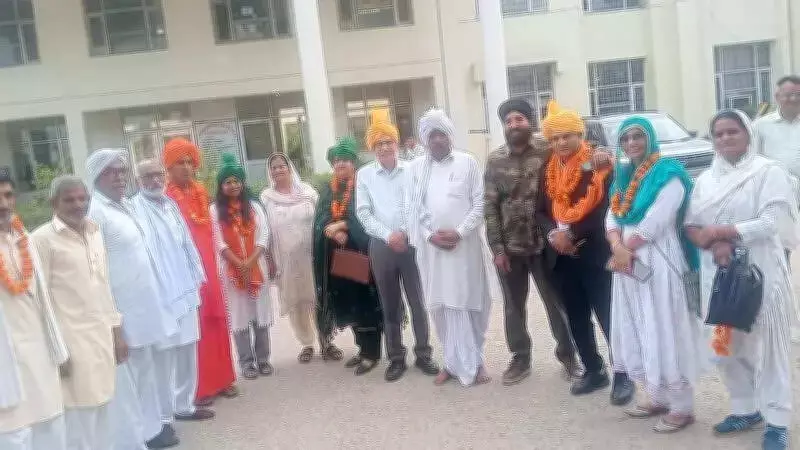
The activist's return was treated as a major event by local agricultural and social unions, who gathered in large numbers to welcome her and her legal team. This outpouring of support highlights the deep connections Azad maintains within her community and the broader social movements in Haryana.
Supreme Court advocate Balraj Singh Malik, who led the defence, accompanied Azad to her village. Malik, credited by supporters for tirelessly navigating the complex UAPA charges, noted that Azad is the first among the accused group to return home. He used the occasion to pledge continued efforts for others he claims are "imprisoned wrongly", emphasizing ongoing legal battles.
Support from Regional Figures and Farmer Groups
The homecoming drew significant regional figures, including members from the Samyukt Kisan Morcha and various ‘Khap' councils. High-profile farmer activists, such as state presidents of the BKU Ekta Ugraha and the Kisan Sabha, were present to signal their ongoing support for Azad. Their presence underscores the intersection of social activism and agricultural advocacy in the region, reinforcing a network of solidarity.
This event not only marks a personal victory for Azad but also serves as a focal point for discussions on legal rights and activist freedoms in India. As she settles back into village life, the broader implications of her case continue to resonate within legal and social circles.






