As the Indian Parliament gears up for a significant 10-hour discussion on Monday to commemorate the 150th anniversary of Vande Mataram, the political discourse has reignited a historical debate. The discussion, set to be inaugurated by Prime Minister Narendra Modi in the Lok Sabha, has brought former Prime Minister Jawaharlal Nehru's stance on the national song back into sharp focus.
The Political Spark Igniting the Debate
Ahead of the parliamentary session, BJP MP Sambit Patra stated that the debate would once again "expose" Jawaharlal Nehru, revealing his "reality" to the nation. This comment follows recent political exchanges where PM Modi criticized the Congress for historically "omitting" certain stanzas of Vande Mataram, alleging it divided the country on religious lines. The Opposition countered by accusing the Prime Minister of insulting Congress stalwarts present at the crucial 1937 Congress Working Committee meeting where the song's adoption was formalized.
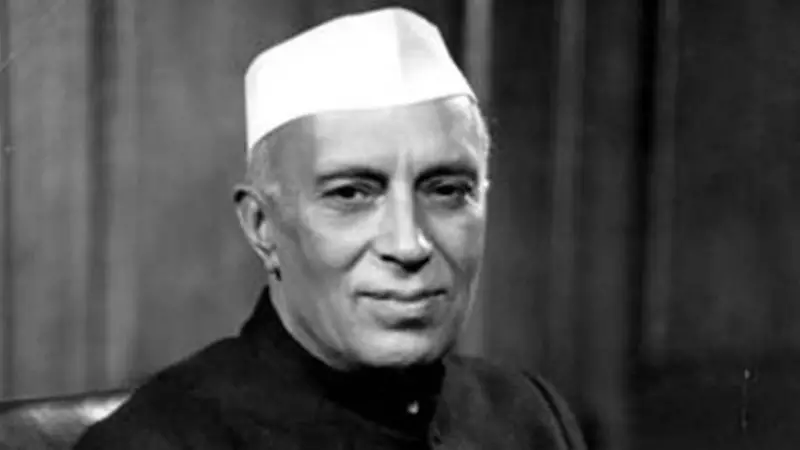
Amidst this contemporary political clash, the core of the controversy lies in a decision made decades ago. Why did India's first Prime Minister, Jawaharlal Nehru, advocate for Rabindranath Tagore's Jana Gana Mana to be the national anthem instead of the deeply revered Vande Mataram?

Nehru's Detailed Rationale: Music Over Words
The answers are meticulously documented in Nehru's own writings, speeches, and cabinet notes from 1948, available in The Nehru Archive. In a detailed Cabinet note dated May 21, 1948, Nehru laid out his primary reasoning, emphasizing that a national anthem's tune was more critical than its words.
He argued that an anthem is played by orchestras and military bands more often than it is sung, both in India and abroad. Therefore, its musical composition needed to be "full of life as well as dignity," easily adaptable for varied musical renditions, and appreciable to international audiences.
Nehru expressed that while Vande Mataram was beautiful and historically significant, its tune was "rather plaintive and mournful and repetitive." He found it challenging for orchestral adaptation and believed it was "particularly difficult for foreigners to appreciate it as a piece of music." In contrast, he felt Jana Gana Mana possessed distinctive, lively features that represented fulfillment rather than the "longing" of the freedom struggle embodied by Vande Mataram.
He also pointed to linguistic accessibility, noting that Vande Mataram's language was "very difficult for an average person," whereas Jana Gana Mana's words were simpler.
Correspondence Clarifying the Stance
Nehru's position was further clarified in his private correspondence. In a letter to Congress leader and first Chief Minister of West Bengal, Bidhan Chandra Roy, on June 15, 1948, Nehru stressed that the issue was not about religious objections. He wrote, "A national anthem should be something of victory and fulfilment, not of past struggle." He affirmed Vande Mataram's eternal status as a national song connected to the freedom movement but deemed it "completely unsuited" as the official anthem.
About a week later, on June 21, 1948, Nehru responded to Syama Prasad Mookerjee, who later founded the Bharatiya Jana Sangh. He reiterated that the Vande Mataram tune was not feasible for orchestral rendering. He noted that Jana Gana Mana's music had already gained appreciation abroad and carried "an element of triumph and fulfilment."
The Constituent Assembly and a Lasting Legacy
The matter was also addressed in the Constituent Assembly. On August 25, 1948, in reply to a question, Nehru respectfully called Vande Mataram the "premier national song of India" with an indisputable historical tradition. However, he maintained that for the specific role of a national anthem tune, played internationally, Jana Gana Mana was more suitable due to its distinctive and adaptable melody.
He concluded that the final decision rested with the Constituent Assembly, leaving it open for them to choose a completely new song if desired. The Assembly ultimately accepted his suggestion, cementing the roles of both songs in the republic's identity.

Today, as Parliament revisits the legacy of Vande Mataram, Nehru's detailed, music-centric arguments from 1948 provide a crucial historical context to a debate that continues to resonate in India's political and cultural landscape.