

Nitish Kumar Concludes Bihar Political Chapter, Assumes Rajya Sabha Role
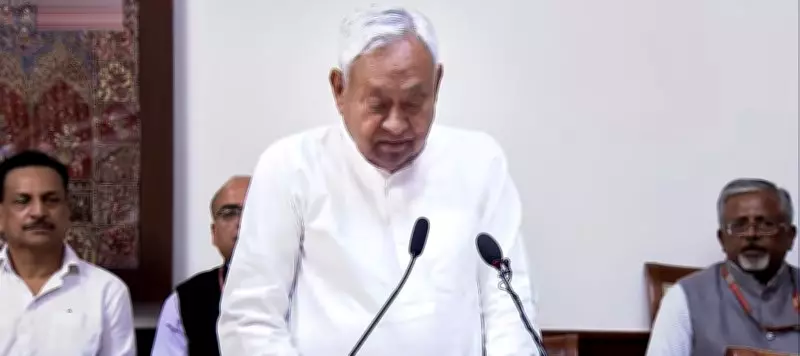
In a major political development, Nitish Kumar, the long-serving Chief Minister of Bihar, has officially ended his tenure in the state's leadership and taken oath as a member of the Rajya Sabha in New Delhi. This move marks a pivotal transition in his decades-long political career, shifting from active state governance to a national legislative role.
End of an Era in Bihar Politics
Nitish Kumar's departure from Bihar's political scene concludes a significant chapter that spanned over many years, during which he played a central role in shaping the state's policies and development trajectory. His leadership was characterized by a focus on governance reforms and social initiatives, leaving a lasting impact on Bihar's administrative landscape.
The oath-taking ceremony was conducted in the capital, where Kumar formally assumed his new position as a Rajya Sabha MP. This step is seen as a strategic shift, potentially aligning with broader national political objectives and providing him with a platform to influence central legislation and debates.

Implications for Bihar and National Politics
This transition raises questions about the future political dynamics in Bihar, as Kumar's exit creates a leadership vacuum that could reshape alliances and power structures within the state. Meanwhile, his entry into the Rajya Sabha is expected to bolster his influence at the national level, where he may advocate for regional interests and contribute to parliamentary discussions.
Observers note that this move could signal a recalibration of Kumar's political strategy, possibly in response to evolving electoral landscapes or personal career aspirations. It underscores the fluid nature of Indian politics, where leaders often navigate between state and national roles to maximize their impact.
As Nitish Kumar embarks on this new journey, the political community watches closely to see how his experience in Bihar governance will translate into his contributions in the Rajya Sabha, potentially affecting policy-making and inter-state relations in the coming years.






