No Confidence Motion Against Lok Sabha Speaker Om Birla: What Happens Next?
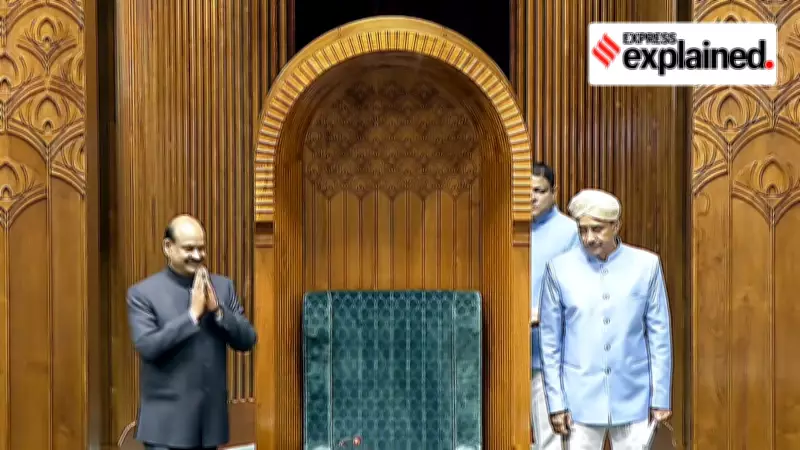
In a significant political development, the Opposition on Tuesday, February 10, 2026, moved a no confidence motion against Lok Sabha Speaker Om Birla. This action follows allegations that Birla restricted Leader of Opposition Rahul Gandhi from discussing former Indian Army Chief General M M Naravane's unpublished memoir and made claims about a potential security threat to Prime Minister Narendra Modi within the House. Lok Sabha sources have confirmed that the motion will now be examined and processed according to established parliamentary rules.
Can the Lok Sabha Speaker Be Removed from Office?
Yes, the Lok Sabha Speaker or Deputy Speaker can be removed from their position, but this process is exclusive to the Lok Sabha and does not apply to the Rajya Sabha. According to Article 94 of the Indian Constitution, removal is possible through a resolution passed by a majority of all current members of the House. This provision is stringent and outlines specific conditions for vacation, resignation, or removal of these offices.
Constitutional and Procedural Framework for Removal
Article 94 specifies three scenarios under which a Speaker or Deputy Speaker must vacate office:

- Ceasing Membership: If they no longer serve as a member of the Lok Sabha (Article 94(a)).
- Resignation: If they submit a written resignation (Article 94(b)).
- Removal by Resolution: If a resolution is passed by a majority of all then members of the House (Article 94(c)).
The procedural steps for initiating such a removal are governed by Rules 200 to 203 of the Rules of Procedure and Conduct of Business in Lok Sabha. A member must submit a written notice to the Secretary-General of the Lok Sabha, which can be done jointly by two or more members. Crucially, at least fourteen days' notice is required before the resolution can be moved. Once received, the motion is scheduled for discussion on a day fixed by the Speaker, which must be after the fourteen-day notice period.
Historical Precedents of No Confidence Motions Against Speakers
This is not the first instance of a no confidence motion against a Lok Sabha Speaker. Historical records show three previous cases:
- 1954: Ganesh Vasudev Mavalankar, the first Lok Sabha Speaker, faced a motion in December 1954.
- 1966: Hukam Singh encountered a similar motion in November 1966.
- 1987: Balram Jakhar was subject to a motion in April 1987.
For such a motion to proceed, specific conditions must be met. It requires backing from at least two members, and during the discussion, a quorum of 50 members must stand up in favor. Rule 200A further mandates that the resolution must be specific, clearly expressed, and free from arguments, imputations, or defamatory statements.
Process After Admission of the Motion
If the motion is admitted, members in favor must rise. If at least 50 members do so, the Speaker declares that leave has been granted, and the resolution is scheduled for discussion within ten days. On the appointed day, it is included in the list of business, and discussion is strictly confined to the charges in the resolution. The moving members may speak for up to fifteen minutes if permitted by the presiding officer.
If fewer than 50 members rise, the motion fails, and the presiding officer informs the House that leave has not been granted. Additionally, any resolution submitted without proper notice is not proceeded with.
Rights of the Speaker During Removal Proceedings
During discussions on their removal, the Speaker retains the right to speak and participate in Lok Sabha proceedings. They are entitled to vote on the resolution or related matters, except in cases of a tie. Furthermore, the Speaker does not vacate office until immediately before the first meeting of the House after dissolution, ensuring continuity in parliamentary functions.
This comprehensive framework ensures that the removal of a Lok Sabha Speaker is a rigorous and transparent process, balancing accountability with parliamentary stability.