

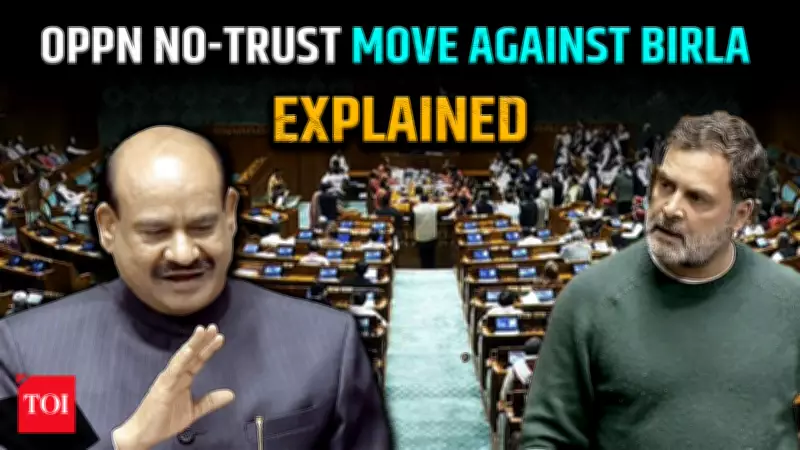
Opposition Launches Rare No-Confidence Motion Against Lok Sabha Speaker
In a significant parliamentary development, the Congress party has initiated a rare no-confidence motion against Lok Sabha Speaker Om Birla. This move comes amid escalating tensions between the opposition and the government, with allegations of partisan conduct and systematic denial of speaking rights to opposition members, including Leader of the Opposition Rahul Gandhi.
Allegations of Partisan Conduct and Denial of Rights
The motion specifically accuses Speaker Om Birla of exhibiting biased behavior during parliamentary proceedings. Opposition leaders claim that there has been a consistent pattern of denying speaking opportunities to their members, which they argue undermines democratic principles and the spirit of parliamentary debate. The inclusion of Rahul Gandhi, as the Leader of the Opposition in the Lok Sabha, highlights the gravity of these allegations and signals a direct challenge to the Speaker's impartiality.
Parliamentary Rules and Process for No-Confidence Motion
The process for a no-confidence motion against the Speaker is governed by specific parliamentary rules. According to established procedures:

- The motion must be submitted in writing and supported by a minimum number of members, typically a specified percentage of the House.
- Once admitted, it is debated in the Lok Sabha, allowing both sides to present their arguments.
- A vote is then taken, and the motion requires a simple majority to pass, meaning more than half of the members present and voting must support it.
This procedural framework ensures that such motions are not taken lightly and require substantial backing to proceed. The rarity of no-confidence motions against Speakers underscores the exceptional nature of the current situation.
Numbers Game: Can the Opposition Succeed?
The success of this no-confidence motion hinges critically on the numerical strength of the opposition in the Lok Sabha. As of now, the ruling coalition holds a clear majority, which poses a significant challenge for the opposition. Key factors include:
- Current Composition: The government's majority means that unless there is defection or abstention, the motion is unlikely to pass.
- Opposition Unity: The opposition bloc must maintain cohesion and ensure all its members vote in favor to maximize their numbers.
- Strategic Implications: Even if the motion fails, it serves as a powerful symbolic gesture to highlight grievances and put pressure on the government.
Political analysts note that while the motion may not succeed numerically, it effectively brings the issue of parliamentary conduct into the public spotlight, potentially influencing future proceedings.
Broader Context: Escalating Government-Opposition Tensions
This no-confidence motion occurs against a backdrop of heightened exchanges between the government and opposition. Recent sessions have seen frequent disruptions and heated debates, with both sides accusing each other of undermining parliamentary norms. The motion against the Speaker is seen as an escalation, reflecting deep-seated frustrations over perceived imbalances in the House's functioning.
Experts suggest that such moves could set precedents for how parliamentary disputes are handled, emphasizing the need for transparency and fairness in legislative processes.
As the situation unfolds, all eyes are on the Lok Sabha to see how this rare no-confidence motion will be debated and voted upon. The outcome will not only test the opposition's numerical strength but also shape the dynamics of Indian parliamentary democracy in the coming sessions.






