

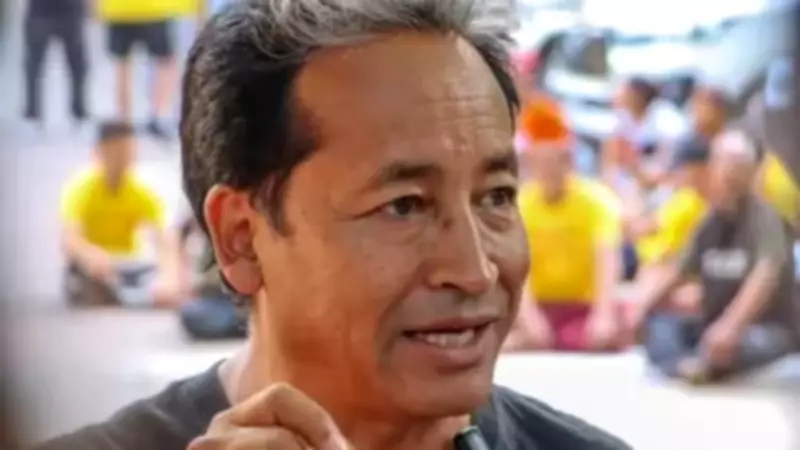
Centre Revokes NSA Against Ladakh Activist Sonam Wangchuk
The Central government's decision to revoke the National Security Act (NSA) against prominent climate activist Sonam Wangchuk and secure his release has been hailed by key politico-religious groups in Ladakh as a significant development that removes the "anti-national" stigma from the region's ongoing struggle for statehood and Sixth Schedule status. The Leh Apex Body (LAB) and Kargil Democratic Alliance (KDA) issued statements on Saturday welcoming the move but simultaneously labeled it as an "incomplete" step in addressing the broader concerns of the Ladakhi people.
Legal Pressure and Failed Justification Cited
Chering Dorjay Lakrook, the co-chairman of the Leh Apex Body, explicitly stated that the relief for Wangchuk, who is a member of LAB, was granted because the Centre had failed to substantiate its claims in the Supreme Court that the activist was involved in anti-national activities. "We welcome this order. However, the government was losing this case in the apex court. That is precisely why they took this decision," Lakrook asserted. The Supreme Court has been actively hearing a petition filed by Wangchuk's wife, Gitanjali Angmo, challenging his detention which began on September 26, 2025.
This detention occurred merely two days after violent protests erupted in Leh, where demonstrators were demanding statehood and Sixth Schedule status for Ladakh. The tragic incident resulted in four fatalities and over 80 injuries due to alleged police firing on the protesters. The court is scheduled to reconvene on Tuesday to further deliberate on the case.

Vindication of the Movement's Legitimacy
Lakrook emphasized that the revocation of the NSA against Wangchuk serves as a clear vindication for the Ladakhi movement, which has been unjustly labeled as anti-national by government authorities. "The government accused our movement of being anti-national. Previous Lieutenant Governor Kavinder Gupta also echoed similar sentiments. We have been vindicated by this order that there was nothing anti-national in our legitimate struggle," he declared. Despite this positive development, Lakrook confirmed that a planned rally in Ladakh on March 16, protesting the detention and alleged delays in talks with the Centre, will proceed as scheduled.
Incomplete Relief and Ongoing Challenges
Asgar Ali Karbalai, co-chairman of the Kargil Democratic Alliance, echoed the sentiment of incomplete relief, describing Wangchuk's release as a step forward but not a comprehensive solution. "There are still 80 individuals against whom cases were filed following the September 24 protests. Their situations remain unresolved," Karbalai pointed out, highlighting the ongoing legal battles faced by many protesters.
Official Responses and Cautions
Vinai Kumar Saxena, the newly appointed Lieutenant Governor of Ladakh who assumed charge just two days prior, acknowledged Wangchuk's release as a positive step. However, he issued a stern caution, stating that "there is no space for agitation, bandhs, or violence in Ladakh," underscoring the administration's commitment to maintaining law and order in the region.
In a separate statement, Ravinder Sharma, the spokesperson for the Jammu and Kashmir Congress, contended that the Centre was compelled to revoke Wangchuk's "illegal" detention due to mounting public pressure and the unwavering spirit of the law. This perspective adds a political dimension to the unfolding narrative, suggesting that governmental action was driven by external forces rather than internal reconsideration.
The revocation of the NSA against Sonam Wangchuk marks a pivotal moment in Ladakh's protracted fight for constitutional recognition and autonomy. While it alleviates immediate legal pressures on a key figure, the broader demands for statehood and Sixth Schedule status, along with the resolution of cases against numerous protesters, continue to loom large, ensuring that the struggle remains a central issue in the region's socio-political landscape.






