From Musical Gift to Political Confrontation: The Oli-Balen Dynamic in Nepal
In a remarkable turn of events that encapsulates Nepal's evolving political landscape, the relationship between former Prime Minister KP Sharma Oli and Kathmandu Mayor Balendra 'Balen' Shah has transformed from cordial mentorship to bitter electoral rivalry. The journey began in June 2022 when Shah, at just 32 years old, transitioned from the hip hop scene to become Kathmandu's youngest mayor.
The Symbolic Tabla Gift
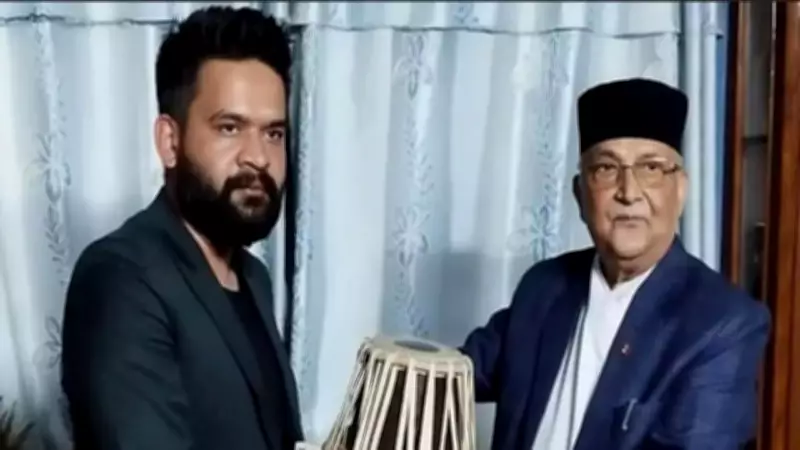
Soon after Shah's election victory, Oli—then serving as UML chairman and Leader of the Opposition—presented the young mayor with a thoughtful gift: a metal tabla. This gesture carried deep symbolic meaning, as Oli later explained during the Nepal Literature Festival in Pokhara on December 23, 2022.
"I had learnt that Balen's clay tabla had broken while shifting to the capital," Oli revealed, "and so gave him an unbreakable metal one."

The former prime minister framed this gift as more than a casual present, drawing parallels between musical discipline and political leadership. "Just as music requires discipline and riyaaz (training), so does politics," Oli stated. "If he keeps working at both, he can grow into a good artist, a good public figure and a good politician."
Oli emphasized that Shah's interest in tabla and music represented "a good sign for a public representative," noting his own appreciation for arts and culture despite his political career. The practical consideration was equally important: "He didn't have a tabla, I had a metal tabla, it didn't break even when (I) moved. That's why I gave a gift of a strong, good quality tabla."
The Relationship Sours
Initially, the relationship appeared warm and constructive. Oli acknowledged that "the mayor is very popular" and noted their previous meetings, stating this was already public knowledge. However, this cordiality proved temporary.
As Balen Shah's popularity surged among younger voters seeking change, and Oli increasingly came to represent the established political order, their relationship deteriorated significantly. By the time campaigning began for the Jhapa-5 constituency, what had begun as mentorship had transformed into one of Nepal's most intensely personal electoral battles.
The Bitter Electoral Contest
The campaign witnessed several dramatic exchanges that highlighted the depth of their political rift. Oli publicly challenged Shah to a debate, which the younger politician refused. In one of the most discussed moments of the campaign, Shah made serious allegations against the former prime minister.
Balen asked Oli when he would accept being called a "terrorist," directly accusing the senior politician of responsibility for killings during the September 2025 protests. Shah declared that "standing on the same stage as the killer of 76 children and his accomplices would make me complicit," drawing a stark moral line between them.
The Ironic Conclusion
The final Jhapa-5 results delivered a decisive verdict: Balen Shah defeated KP Sharma Oli by 68,348 votes to 18,734—a margin of nearly 50,000 votes. In a moment of biting irony, Oli returned to their earlier connection, congratulating Shah on social media by sharing the 2022 photograph from their meeting where he had presented the metal tabla.
In his post, Oli wished 'Balen Babu' a successful five-year term, completing a full circle from musical gift-giver to defeated political opponent. The tabla that was meant to symbolize unbreakable quality and political mentorship now stands as a reminder of Nepal's shifting political allegiances and generational change in leadership.
This political saga reveals much about contemporary Nepali politics: the tension between established leaders and emerging voices, the personal dimensions of political competition, and how symbolic gestures can acquire new meanings as relationships evolve. The story of Oli's tabla gift to Balen Shah has become more than an anecdote—it's a metaphor for Nepal's ongoing political transformation.