

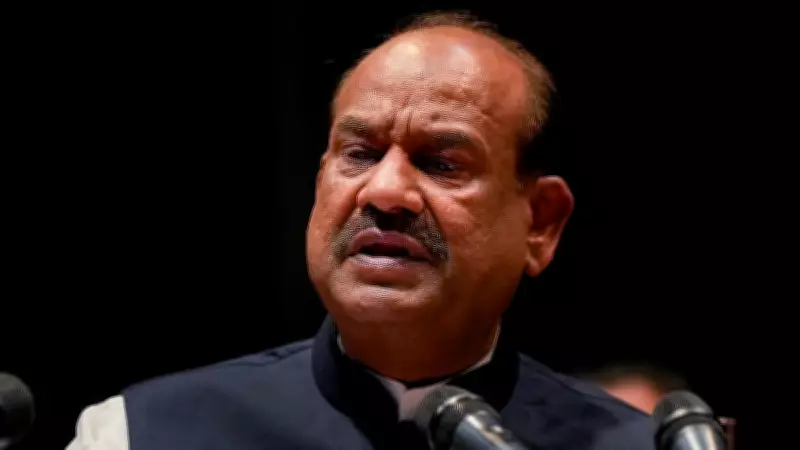
Speaker Om Birla Instructs Lok Sabha Secretary General to Examine Opposition Notice for Removal Resolution
In a significant parliamentary development, Lok Sabha Speaker Om Birla has formally directed Secretary General Utpal Kumar Singh to thoroughly examine a notice submitted by opposition members. This notice seeks to move a resolution calling for the Speaker's removal from his position.
Official Directive and Procedural Steps
According to official sources, Speaker Birla has explicitly asked Secretary General Singh to scrutinize the submitted notice in detail. The directive mandates that the examination be conducted with utmost diligence, followed by appropriate action as deemed necessary under the established parliamentary framework.
The entire process will be meticulously handled in strict adherence to the Lok Sabha's rules and regulations, ensuring transparency and procedural integrity. This step underscores the institutional commitment to due process, regardless of the political nature of the request.

Context and Political Implications
This move comes amid ongoing political tensions between the ruling BJP and opposition parties, particularly the Congress, within the Lok Sabha. The submission of a removal notice against the Speaker is a rare and serious parliamentary maneuver, reflecting heightened confrontations in India's legislative arena.
The opposition's action highlights deepening disagreements over parliamentary conduct and governance issues. By formally processing the notice, the Lok Sabha secretariat is demonstrating its role as a neutral arbiter, tasked with upholding constitutional and procedural norms without political bias.
Next Steps and Parliamentary Protocol
Once the examination by Secretary General Singh is complete, the matter will be processed according to standard parliamentary protocols. This involves:
- A detailed review of the notice's compliance with submission guidelines.
- Assessment of the substantive grounds cited for the removal resolution.
- Determination of the appropriate procedural pathway, which may include referral to relevant committees or scheduling for house discussion.
The outcome of this examination could set a precedent for how such high-stakes parliamentary motions are handled in the future, emphasizing the balance between political expression and institutional stability.






