

Opposition Leaders Launch Scathing Attack on 2026-27 Budget, Calling It a Missed Chance
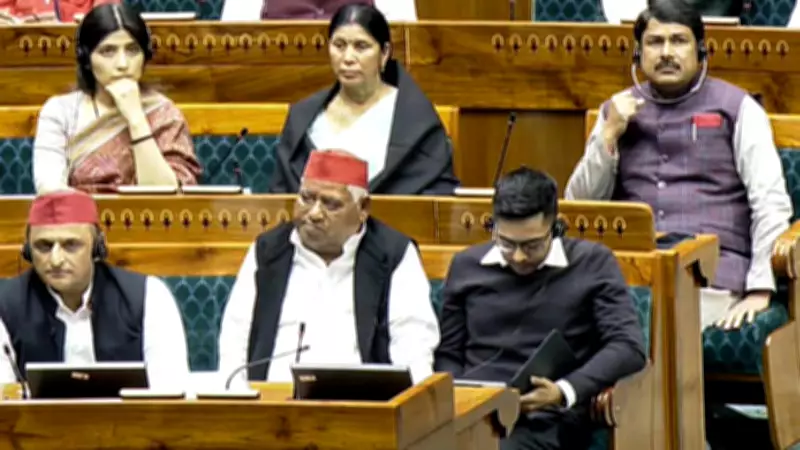
After days of parliamentary deadlock, the Lok Sabha finally commenced discussions on the 2026-27 'Kartavya Budget' on Tuesday. The session saw fierce criticism from Opposition leaders, who labeled the financial plan as a squandered opportunity and accused the central government of showing stepmotherly treatment to various states. The debate also extended to the implications of the newly announced India-US trade deal, with leaders questioning its fairness and impact on Indian interests.
Congress Leader Shashi Tharoor Leads the Charge with Harsh Critique
Senior Congress leader Shashi Tharoor spearheaded the Opposition's assault, describing the Budget as underwhelming and disconnected from the realities faced by ordinary citizens. He argued that while the document features glossy schemes and utopian projections, it fails to address pressing issues such as unemployment, rising living costs, and inequality. Tharoor emphasized that the Budget leaves the everyday lives of the aam aadmi unchanged, ignoring critical areas like farmer distress, stagnant wages, and inadequate devolution of funds to states.
Tharoor highlighted specific concerns, noting the silence on revising the PM Kisan Nidhi disbursement despite deepening farmer distress. He also pointed out that urban unemployment has risen to 6.7% as of December last year, with the Budget offering no support for gig workers, whom he called the backbone of India's new economy. In a poetic flourish, he quoted Mirza Ghalib to suggest that the government's claims are carefully curated illusions rather than substantive policies.

Opposition Voices Unite in Condemning State Neglect and Trade Deal
Samajwadi Party chief Akhilesh Yadav echoed Tharoor's sentiments, terming the Budget directionless and lacking vision for achieving Viksit Bharat by 2047. He alleged that the document has nothing for marginalized communities like Picchda-Dalit-Adivasi (PDA) and fails to include special schemes for Uttar Pradesh, which has a population of 25 crore. On the India-US trade deal, Yadav criticized it as not a deal but a dheel (ceding space), arguing it undermines India's negotiating power.
Trinamool Congress MP Abhishek Banerjee joined the fray, accusing the Budget of curating headlines rather than healing the economy. He questioned its silence on West Bengal, a poll-bound state, and claimed it rewards tax avoiders while punishing honest taxpayers. Banerjee also slammed the India-US trade deal, warning that it could open Indian markets to heavily subsidized American farm produce, depressing prices and harming Indian farmers who lack Minimum Support Price (MSP) protection.
Detailed Criticisms on Economic and Social Fronts
The Opposition's critique extended to specific economic aspects. Tharoor elaborated on the India-US trade deal, describing it as less of a free trade agreement and more of a pre-committed purchase agreement that lacks reciprocity. He noted that India has promised to buy $500 million worth of American goods over five years, despite having a trade surplus of only $45 billion with the US. This, he argued, could convert a surplus into a long-term deficit without securing proportional market access or policy space in return.
Other leaders, including DMK MP T R Baalu, accused the Centre of exhibiting stepmotherly treatment to Tamil Nadu by not including any special schemes for the state. The collective Opposition stance underscored a perception that the Budget favors allied states while neglecting those with opposing political affiliations, thereby violating constitutional promises of equality among states.
In summary, the 2026-27 Budget has sparked intense debate, with Opposition leaders unanimously condemning it for its perceived failures in addressing unemployment, farmer issues, and state-specific needs, while raising serious concerns about the India-US trade deal's implications for India's economic sovereignty.






