

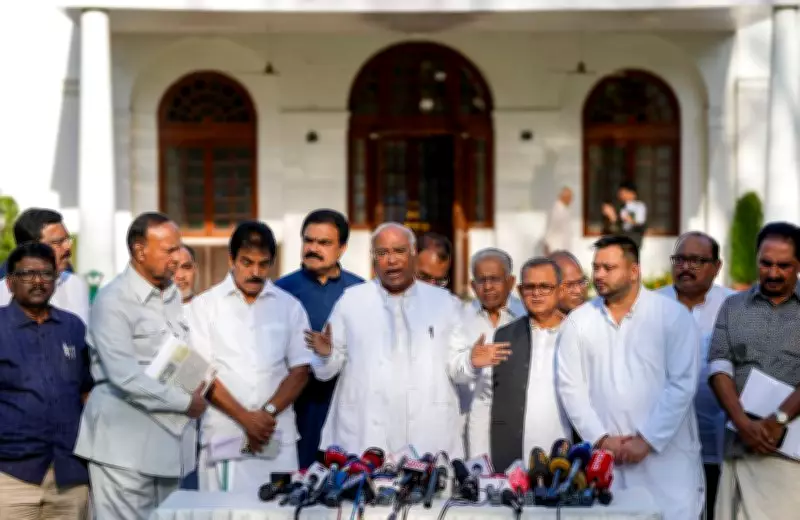
As many as 23 political parties of the opposition INDIA bloc are set to meet on Monday to redraw their strategy against the Bharatiya Janata Party and iron out differences amid changed power dynamics following the defeat of regional anchors Trinamool Congress and Dravida Munnetra Kazhagam in recent assembly polls.
Key Leaders to Attend
Top opposition leaders, including Congress's Rahul Gandhi and Mallikarjun Kharge, TMC's Mamata Banerjee and Abhishek Banerjee, Samajwadi Party chief Akhilesh Yadav, Rashtriya Janata Dal's Tejashwi Yadav, and Shiv Sena (UBT) leader Uddhav Thackeray, along with Left leaders and representatives from smaller parties, are likely to attend the meeting at the Constitution Club in New Delhi.
In a post on X, Congress general secretary Jairam Ramesh confirmed that 23 political parties have confirmed their participation in the 'INDIA janbandhan' meeting, asserting that the opposition bloc continues to stand united through its diversity. Ramesh noted that some parties expressed inability to attend for their own reasons but conveyed strong opposition to the Modi government's policies.

Absentees and New Inclusions
The Aam Aadmi Party has publicly distanced itself from the bloc, while the DMK announced its decision to boycott the gathering after the Congress severed ties with it in Tamil Nadu and joined the TVK-led government. The Tamilaga Vettri Kazhagam is likely to be included in the bloc.
Agenda and Challenges
The alliance will deliberate on the future course of action and aim to present a united front against the Modi government on national issues ahead of the next election cycle in states and the 2029 Lok Sabha polls. The recent defeat of the TMC in West Bengal has also spurred the opposition to come together against the saffron surge.
The TMC is expected to raise the issue of alleged attacks on its leaders in Bengal and seek support from INDIA bloc parties. 'Meeting with a common purpose and clear intent. INDIA united. Many parties look forward to meeting in the spirit of camaraderie,' TMC MP Derek O'Brien said.
Internal Differences
The recent assembly elections have highlighted differences within the bloc. The Communist Party of India (Marxist) is set to raise with the Congress the charge that the Left had a political understanding with the BJP in Kerala polls, where the Left lost against the Congress-led United Democratic Front. CPI(M) general secretary MA Baby wrote to Congress president Mallikarjun Kharge, stating that such accusations are inconsistent with the spirit of cooperation underpinning the alliance.
BJP spokesperson Shehzad Poonawalla commented, 'This is the real state of the INDI alliance -- no mission, no vision, only confusion, division, allegations and ambition for positions.'
Unity Amid Diversity
Jairam Ramesh emphasized that like India, the INDIA janbandhan continues to stand united through its diversity. He stated that parties unable to attend have conveyed strong opposition to the Modi government's policies, which he claimed are 'snatching away the right to vote for millions of Indians, assaulting the Constitution daily, attacking Opposition leaders through investigative agencies... seriously damaging the livelihoods of crores of Indians, breaking household budgets through relentless price rise, betraying the hopes and aspirations of lakhs of youth, dampening investment climate, and compromising the national interest by its foreign policy.'
Background
The last official meeting of the Indian National Developmental Inclusive Alliance was held in New Delhi on June 1, 2024, just ahead of the Lok Sabha election. On August 7, 2025, Rahul Gandhi hosted a crucial strategy dinner for top INDIA bloc leaders at his New Delhi residence, bringing together nearly 50 leaders from over 25 opposition parties, where the issue of alleged electoral manipulation, particularly the Special Intensive Revision of voter rolls in Bihar, was raised. Since then, the INDIA bloc leadership has gathered formally during consultations ahead of Parliament sessions to discuss floor coordination and joint issues against the central government.






