

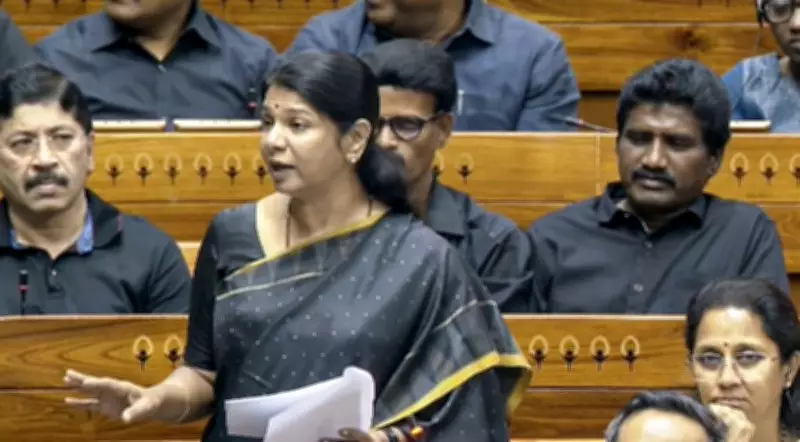
Opposition Raises Concerns Over Women's Law Amendment Process in Lok Sabha
In a significant development in the Lok Sabha, opposition members have raised pointed questions regarding the government's approach to amending the women's reservation law. The core issue revolves around the procedural steps taken by the government, specifically the move to introduce amendments to the legislation before formally notifying the principal act itself. This sequence of events has sparked a debate on the floor of the house, with opposition leaders demanding clarity and justification for what they perceive as an unconventional and potentially problematic legal maneuver.
Legal and Procedural Validity Under Scrutiny
The opposition's critique centers on the fundamental principles of legislative procedure. Typically, a principal act is first notified and brought into force, after which any necessary amendments are proposed and debated. However, in this instance, the government has initiated the process of amending the women's reservation law prior to the notification of the principal act. This deviation from standard practice has led opposition members to question the legal validity and procedural soundness of the government's actions. They argue that such a move could set a concerning precedent and may undermine the integrity of the legislative process.
Key arguments presented by the opposition include:

- The need for transparency in explaining the rationale behind amending a law before its enactment.
- Concerns about potential legal challenges that could arise from this atypical sequence.
- The importance of adhering to established parliamentary procedures to ensure robust and credible legislation.
Government's Position and Broader Implications
While the government has yet to issue a detailed public response to these specific queries in the Lok Sabha, the situation highlights broader tensions in the legislative arena. The women's reservation law, aimed at enhancing female representation in political bodies, is a highly significant and closely watched piece of legislation. Any procedural irregularities or perceived haste in its amendment could impact public trust and the law's long-term effectiveness. The opposition's intervention underscores the critical role of parliamentary oversight in scrutinizing government actions, especially on matters of substantial social and political importance.
This development occurs against a backdrop of ongoing debates about women's empowerment and political participation in India. The manner in which this law is processed and amended will be closely monitored by stakeholders across the political spectrum and civil society.






