Opposition to Corner Government in Parliament Over India-US Trade Deal, Accuses PM Modi of 'Surrender'
In a significant political development, Opposition parties are set to corner the government in Parliament over the recently announced India-US trade deal, with Congress leading the charge by accusing Prime Minister Narendra Modi of having "completely surrendered" to US demands. The issue has sparked heated debates, with Opposition members demanding transparency and raising concerns about India's strategic autonomy and the impact on domestic sectors, particularly agriculture.
Adjournment Motions and Parliamentary Disruptions
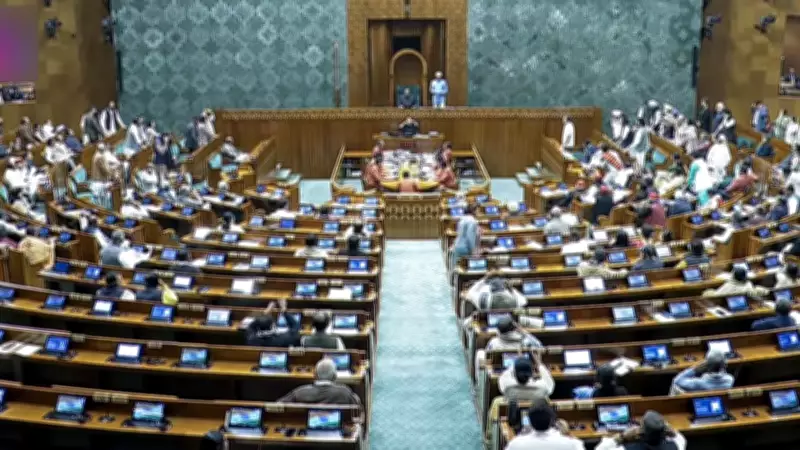
As Lok Sabha proceedings commenced, Opposition members made their intentions clear by shouting slogans against Prime Minister Narendra Modi regarding the India-US trade deal. The situation escalated quickly, leading Speaker Om Birla to adjourn the House amid the uproar. Several Opposition MPs, including senior Congress lawmaker K C Venugopal, moved adjournment motions seeking an immediate discussion on the trade agreement between India and the United States.
This move underscores the Opposition's determination to hold the government accountable for the terms of the deal, which they argue were negotiated without adequate parliamentary oversight or public scrutiny.
Details of the India-US Trade Deal
The India-US trade deal, finalized after months of negotiations, was announced by US President Donald Trump, who stated that the US has "effective immediately" lowered tariffs on India to 18 per cent from 50 per cent. This development came after India addressed several US demands in its Budget and began signing trade agreements with other nations, including the United Kingdom and the European Union.
However, Opposition sources have revealed that their strategy will focus on questioning India's autonomy, as the deal reportedly includes commitments to stop purchasing Russian oil, potentially shifting imports to the US and Venezuela, and agreeing to buy $500 billion worth of US energy, agriculture, coal, and other products.
Congress and Opposition Criticisms
Congress communication in-charge Jairam Ramesh, who is also a Rajya Sabha member, strongly criticized the government, stating, "It is abundantly clear that Prime Minister Modi has, like he did on May 10, 2025, completely surrendered. He has most definitely appeased President Trump. India stands diminished by this unfortunate sequence of events."
The Congress party has announced that it will demand in both Houses of Parliament that the full text of the trade deals with the US and the EU be tabled for debate. Ramesh emphasized, "Parliament is in session. The text of both the EU and US trade deals must be laid on the Table of both Houses and debated – especially since the US Secretary of Agriculture, Brooke Rollins, has issued a statement claiming that India has liberalised agricultural imports from the US."
Concerns Over Agricultural Imports and Foreign Policy
The liberalization of agricultural imports is a key issue that the Opposition plans to exploit in Parliament. Shiv Sena (UBT) MP Priyanka Chaturvedi termed the situation "as not a win-win for India," questioning the removal of trade barriers on agricultural goods and the shift in oil procurement policies. She said, "The way we have brought tariffs and trade barriers down to zero… we agree to buy Venezuelan oil, stop buying Iranian oil, and stop buying Russian oil… Then, the trade barriers on agricultural goods have been removed from our markets. It is not what the Indians expected. What has come from Trump’s side doesn’t seem like a win-win situation at all."
Other Opposition parties, including the TMC, Samajwadi Party, and Left parties, are expected to join forces in raising these issues. A Samajwadi Party MP highlighted concerns about farmers, stating, "Our farmers are our backbone. Have they been compromised because of the government’s failure and the liberalisation of agricultural imports? For us (the SP), the farm sector is very important because in Uttar Pradesh, a massive section of people are associated with the farm sector. Hence, we plan to raise this issue… Then, we have decided not to buy Russian oil when the country has been a traditional ally of the country for decades. What kind of foreign policy is this?"
Congress MP Manish Tewari, general secretary of the AICC Foreign Affairs department, echoed these sentiments, asking, "No purchase of oil from Russia. No tariffs on US imports. American tariffs on Indian imports – 18 per cent… What the hell happened to India’s strategic autonomy?"
Broader Implications and Political Strategy
The Opposition's concerted effort to corner the government over the India-US trade deal reflects broader concerns about economic sovereignty and foreign policy direction. By focusing on transparency, agricultural impacts, and strategic autonomy, they aim to galvanize public opinion and pressure the government into a more accountable stance.
This parliamentary showdown is likely to intensify as sessions progress, with the Opposition leveraging every opportunity to question the deal's merits and the government's negotiation tactics.