Owaisi Condemns Assam CM's Remarks on Miya Muslims as Unconstitutional and Divisive
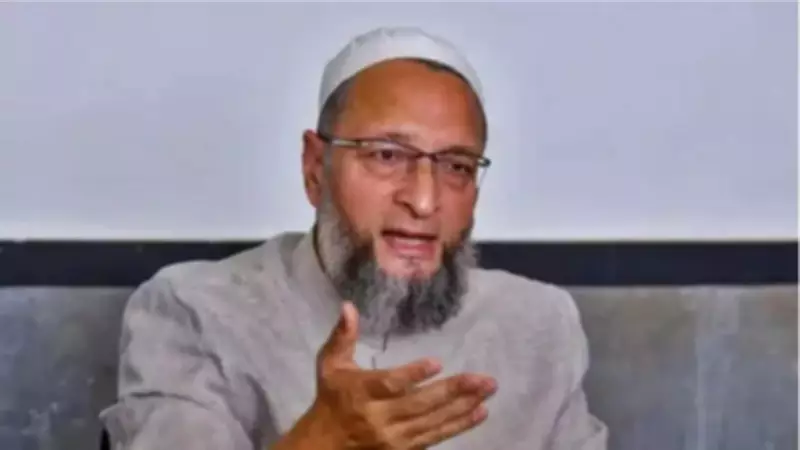
In a fiery response on Tuesday, AIMIM chief Asaduddin Owaisi launched a sharp attack on Assam Chief Minister Himanta Biswa Sarma over his controversial statements regarding "troubling Miya Muslims," labeling them as unconstitutional and deeply divisive. Owaisi's remarks have ignited a political firestorm in the election-bound northeastern state, highlighting ongoing tensions over communal rhetoric and constitutional governance.
Mockery and Accusations of Prejudice
Owaisi did not hold back in his criticism, mockingly stating, "I want to give you Rs 2 as alms," as he accused Sarma of reducing constitutional governance to mere prejudice and intimidation. In a lengthy and impassioned address, Owaisi emphasized that India's Constitution guarantees equality and non-discrimination for all citizens, irrespective of their religion or community.
"The Constitution says all are equal. No discrimination should be done, whether it is a chief minister or anyone else," Owaisi asserted, underscoring the foundational principles of the nation's legal framework. He argued that such rhetoric from a sitting chief minister undermines these core values and fosters division.

Allegations of Scapegoating Bengali-Speaking Muslims
Owaisi further alleged that Bengali-speaking Muslims in Assam are being unfairly scapegoated for a range of issues, from migration to economic challenges like rising prices. He provided stark examples to illustrate his point: "If vegetable prices increase in Assam, Miya Muslims are blamed. If someone wants to vote, they are told to go to Bangladesh."
According to Owaisi, this type of rhetoric amounts to targeting a specific community for political gain, exploiting fears and prejudices to consolidate votes ahead of elections. He warned that such actions could have severe social repercussions, eroding trust and harmony in the diverse state of Assam.
Background: Sarma's Controversial Statements
The AIMIM leader's remarks came in direct response to statements made by Chief Minister Himanta Biswa Sarma, who had openly encouraged action against "Miya Muslims" in Assam. Sarma was quoted as saying, "Trouble the Miya Muslims by any means. If they face trouble, they will go from Assam ... We are directly against the Miya Muslims. We are not hiding anything."
These comments have triggered widespread condemnation, with opposition parties accusing the BJP of resorting to communal polarisation as a strategy to consolidate its voter base. The political landscape in Assam has long been fraught with debates over illegal immigration and indigenous rights, with Bengali-speaking Muslims frequently labeled as "illegal infiltrators" in political discourse.
Political Fallout and Broader Implications
The controversy has added fuel to the already heated political environment in Assam, which is gearing up for elections. Opposition groups have seized on Sarma's remarks to criticize the BJP's approach, arguing that it prioritizes divisive tactics over substantive governance. In response, the BJP has maintained that its focus remains on addressing illegal immigration and protecting the rights of indigenous communities, a stance that has been central to its electoral strategy in the region.
This incident underscores the ongoing challenges in balancing security concerns with constitutional rights, particularly in states with complex demographic and historical contexts. As the debate continues, it raises critical questions about the role of leadership in promoting unity versus division, and the impact of such rhetoric on India's democratic fabric.
Owaisi's forceful rebuttal serves as a reminder of the need for vigilant defense of constitutional principles, especially in times of political tension. The outcome of this controversy could have lasting effects on Assam's social cohesion and electoral dynamics, making it a pivotal issue to watch in the coming months.