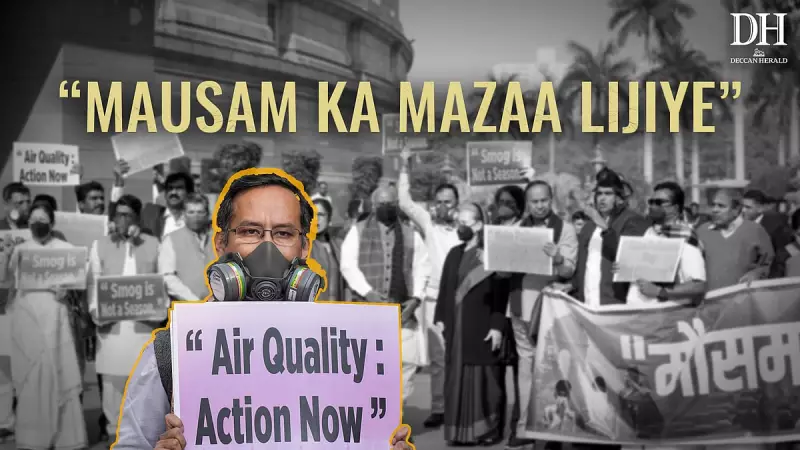
Opposition parties in India brought the proceedings of Parliament to a standstill on Monday, staging loud protests to highlight the severe air pollution crisis gripping the national capital region. The uproar forced multiple adjournments in both the Lok Sabha and the Rajya Sabha as lawmakers demanded immediate government action to address the toxic air quality.
Parliamentary Proceedings Disrupted by Pollution Protests
The protests were led by members of the Congress, Aam Aadmi Party (AAP), and other opposition parties. In the Lok Sabha, Congress MP Adhir Ranjan Chowdhury raised the issue during Zero Hour, calling the situation in Delhi a "gas chamber." He was joined by AAP's lone member in the House, Sushil Kumar Rinku, who also voiced strong concerns. The protests intensified, with opposition MPs shouting slogans and displaying placards inside the House, leading Speaker Om Birla to adjourn the proceedings first until 12 noon and later for the day.
A similar scene unfolded in the Rajya Sabha. Chairman Jagdeep Dhankhar repeatedly urged for order as opposition members created a ruckus over the pollution issue. The protests caused significant disruption, highlighting the political urgency now attached to the environmental and public health emergency.
Delhi-NCR Chokes Under 'Severe' Air Quality
The political storm in Parliament mirrors the literal smog enveloping Delhi and its surrounding areas. On Monday, the air quality index (AQI) in several parts of the city remained firmly in the 'severe' category, exceeding 400. Data from the Central Pollution Control Board (CPCB) painted a grim picture, with Anand Vihar recording an AQI of 488 and Wazirpur at 468 in the morning hours.
This hazardous spike is attributed to a combination of factors, with stubble burning in neighbouring states like Punjab and Haryana being a primary contributor. Unfavourable meteorological conditions, including low wind speed and temperature, are trapping pollutants close to the ground. The situation has triggered the implementation of Stage III of the Graded Response Action Plan (GRAP), which includes a ban on non-essential construction work and the possible restriction of BS-III petrol and BS-IV diesel vehicles.
A Crisis of Governance and Public Health
The opposition's protest underscores a deeper debate about governance and accountability. MPs accused the central government of inaction and failing to coordinate effectively with state governments to tackle the annual menace. The crisis has severe implications for public health, with doctors reporting a surge in respiratory and eye-related ailments among residents.
While the government has stated that measures under GRAP are being enforced, the opposition insists that a more robust, long-term solution is needed. The protests in Parliament signal that air pollution is no longer just an environmental issue but a potent political one, with lawmakers under pressure to show decisive action to protect citizens from the toxic air. The coming days will be critical as authorities monitor AQI levels and the political discourse around this public health emergency continues to evolve.