

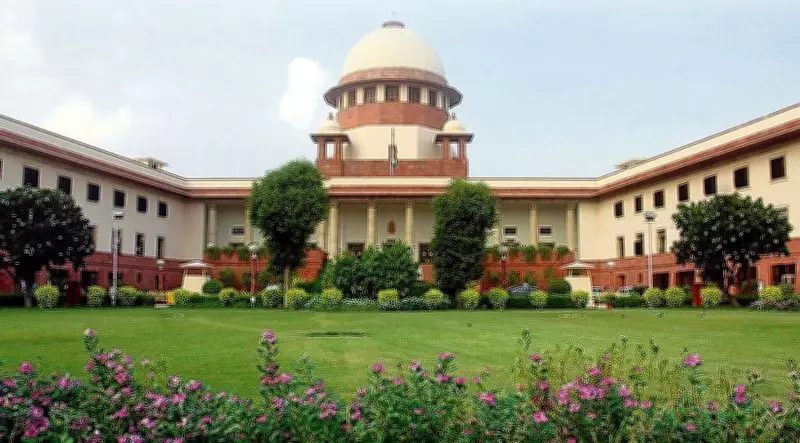
The Supreme Court of India has dissolved the marriage of a doctor couple from Rajasthan who had been living separately for over 15 years and had no children, ruling that persistent refusal of sexual intercourse without a reasonable cause amounts to mental cruelty. The judgment was delivered by a Bench comprising Justices Sanjay Karol and Augustine George Masih on June 2.
Court Uses Article 142 to Dissolve Marriage
The apex court invoked its inherent discretionary powers under Article 142 of the Constitution to put an end to the matrimonial litigation, which had been pending for a considerably long period. The Bench observed that prolonging such a dead relationship would only lead to further frustration and create sociological, psychological, and mental hollowness. It stated, “It is in the best interest of parties and society if ties are severed between parties in cases where litigation has been pending for a considerably long period of time.”
High Court's Divorce Decree Upheld
The Rajasthan High Court had earlier granted divorce in favor of the husband on multiple grounds, including cruelty committed by the wife by denying sexual relations on several occasions. The wife challenged this decision before the Supreme Court. However, the top court upheld the High Court's verdict, emphasizing that withholding sexual intimacy inflicts severe emotional distress and undermines the bedrock of marriage. Citing previous judgments, Justice Masih wrote that denial of conjugal rights, including persistent refusal of sexual intercourse without reasonable cause, constitutes mental cruelty under Section 13(1)(a) of the Hindu Marriage Act.

Facts of the Case
The couple was married in December 2007. The wife worked in Gujarat, while the husband was employed in Rajasthan. They had no children and lived separately for a prolonged period. The Court noted that there was no sanctity left in the marriage. Although the wife claimed she had left her job in Gujarat and started living in Rajasthan, no evidence supported this claim. The Bench observed, “Actions speak more than dry words,” and noted that the wife continued to work in Gujarat with no intention of joining her husband.
Sanctity of Marriage vs. Individual Freedom
The Supreme Court acknowledged that courts should generally preserve the sanctity of marriage and be reluctant to dissolve it at the mere asking of one party. However, in this case, the marriage had decayed beyond repair. The Court stated that a marriage is a deeply personal and social partnership built on mutual respect, shared expectations, and equal responsibility. When such a partnership fails, continuing it on paper only leads to further harm.
Conclusion
The judgment reinforces the legal principle that persistent denial of sexual relations without justification is a valid ground for divorce. The use of Article 142 to dissolve the marriage highlights the Court's willingness to end stale relationships where litigation has been prolonged, providing effective release to the parties from a frozen relationship.






