

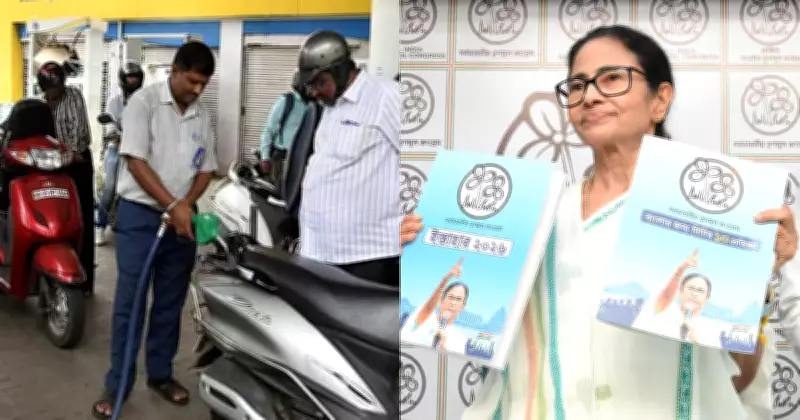
Fuel Costs Escalate as Premium Petrol Sees Rs 2 Hike
In a significant development affecting consumers nationwide, premium petrol prices have been increased by Rs 2 per litre. This adjustment, effective immediately, impacts fuel costs across various states, adding to the financial burden on households and businesses already grappling with inflationary pressures. The hike is attributed to global crude oil price fluctuations and domestic market dynamics, with oil marketing companies adjusting rates to reflect current economic conditions.
TMC Rolls Out Comprehensive Election Manifesto with 10 Key Promises
Simultaneously, the Trinamool Congress (TMC) has released its much-anticipated poll manifesto, outlining a vision for governance centered on 10 core promises. The manifesto, unveiled ahead of upcoming elections, emphasizes public welfare, economic development, and social justice. Key pledges include enhanced healthcare access, improved educational infrastructure, and targeted support for marginalized communities, aiming to address pressing issues and garner voter support.
Analysis of the Dual Announcements and Their Implications
The concurrent announcements of the petrol price hike and TMC's manifesto release highlight contrasting narratives in India's political and economic landscape. On one hand, the fuel increase underscores ongoing challenges in energy pricing and its ripple effects on inflation and daily expenses. On the other, the TMC's manifesto signals a proactive approach to electoral politics, with promises designed to resonate with diverse voter bases. Experts suggest these developments could influence public sentiment and policy debates in the lead-up to elections.

Impact on Consumers and Political Dynamics
The Rs 2 hike in premium petrol prices is expected to:
- Increase transportation costs for individuals and logistics sectors.
- Contribute to higher prices for goods and services due to elevated fuel expenses.
- Spark discussions on government interventions to stabilize fuel rates.
Meanwhile, the TMC's 10-point manifesto focuses on:
- Expanding healthcare facilities and making treatments more affordable.
- Boosting educational opportunities through infrastructure upgrades.
- Implementing social welfare schemes for underprivileged groups.
- Promoting economic growth with job creation initiatives.
- Enhancing agricultural support and rural development.
- Strengthening law and order for public safety.
- Advancing environmental sustainability efforts.
- Improving urban infrastructure and housing.
- Fostering cultural preservation and community engagement.
- Ensuring transparent governance and anti-corruption measures.
As these events unfold, stakeholders are closely monitoring their effects on India's economic stability and political climate, with potential ramifications for future policy directions and electoral outcomes.






