

PM Modi Condemns Congress for 'Reckless' Comments on Gulf Relations
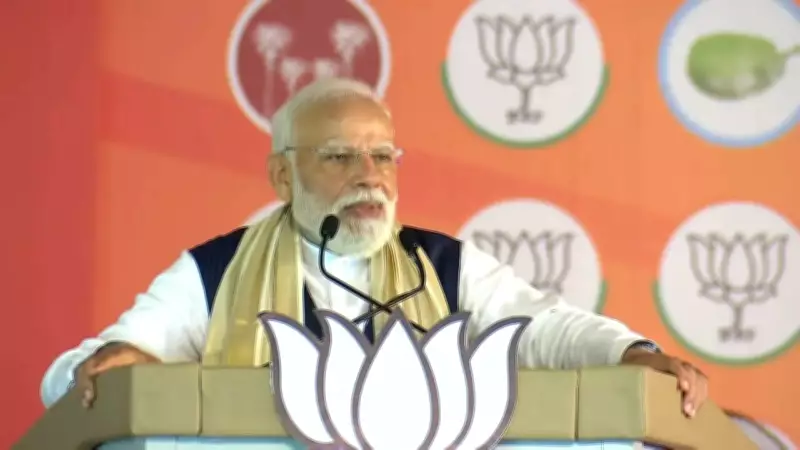
Prime Minister Narendra Modi delivered a sharp rebuke to the Congress party on Saturday, accusing its leaders of making inflammatory remarks that could endanger the lives of thousands of Indians residing in Middle Eastern nations. Speaking at a political rally in Thiruvalla, Kerala, the Prime Minister warned that such statements risk damaging India's crucial relationships with Gulf countries.
Allegations of Political Gamesmanship During Crisis
During his address, PM Modi asserted that Congress leaders are deliberately attempting to provoke Gulf nations into viewing India as an adversary. "The Congress wants the West Asian countries to consider India as their enemy," he stated emphatically. "They hope we make some mistake here, give some statement like that, and trouble befalls Indians living in the Gulf countries."
The Prime Minister connected these remarks to the ongoing tensions between the United States and Iran, suggesting that Congress is exploiting the volatile situation for political gain. He accused the opposition party of seeking to create panic and generate opportunities to criticize his government, rather than prioritizing national security concerns.

Commitment to Diaspora Safety Above Politics
PM Modi made a clear distinction between political competition and national responsibility. "Politics has its place, elections will come and go, but for me, the safety of the lakhs of Keralites there is the priority, and I am committed to that," he declared, addressing not just Congress but also Kerala's ruling LDF and opposition UDF alliances.
The Prime Minister emphasized that his administration views the protection of Indian citizens abroad as a non-negotiable duty. "The safety of our millions of brothers and sisters living there is our sole responsibility," he affirmed, directly urging political opponents to cease what he characterized as irresponsible rhetoric.
Strong Gulf Relations as Protective Shield
Contrasting the alleged recklessness of opposition statements, PM Modi highlighted the strength of India's diplomatic ties with Middle Eastern nations. "It's a good thing our friendship is strong, that all the Gulf governments consider all our Indians as their own family and protect them," he noted, suggesting that these relationships provide crucial security for the Indian diaspora.
The Prime Minister expressed frustration with having to repeatedly caution against provocative language during sensitive times. "I've grown tired of telling them that this is not the time to speak like this," he remarked, imploring political leaders to consider the potential consequences of their words on Indian citizens working and living abroad.
Government's Proactive Security Measures
Beyond the political rhetoric, the Central government has implemented concrete measures to monitor and address potential threats. Authorities have been closely observing developments since the beginning of the US-Iran conflict, with PM Modi personally chairing a comprehensive meeting with chief ministers and lieutenant governors from all states and union territories to assess the situation.
Additionally, the administration has established a high-level inter-ministerial committee to coordinate response efforts. This committee, chaired by Defence Minister Rajnath Singh, brings together multiple government departments to ensure a unified approach to protecting Indian interests and citizens in the region.
Political Context: Kerala's Upcoming Elections
The Prime Minister's remarks come amid heightened political activity in Kerala, where assembly elections are scheduled for April 9, 2026. Vote counting will occur on May 4, with the current legislative assembly's term concluding on May 23. This electoral context adds significance to the political exchanges between national and regional parties regarding diaspora welfare and foreign policy.
PM Modi's speech in Thiruvalla represents both a defense of his government's diplomatic record and a critique of opposition tactics during international crises. The address underscores the continuing political debate over how India should navigate complex global relationships while safeguarding its citizens abroad.






