

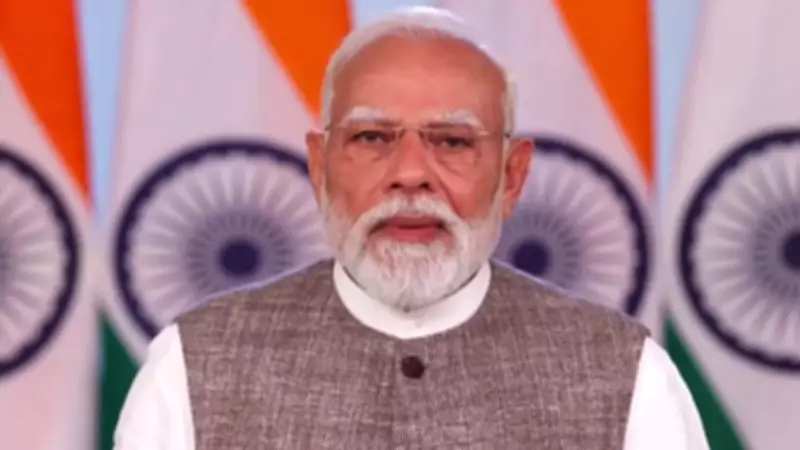
PM Modi Issues Apology After Women's Reservation Bill Defeated in Parliament
Prime Minister Narendra Modi delivered a heartfelt address on Saturday, expressing deep regret over the failure of the women's reservation bill in the Lok Sabha. The Prime Minister characterized this legislative defeat as a significant setback for women across the entire nation and offered a sincere apology for his government's inability to secure its passage despite concerted efforts.
Constitutional Amendment Bill Falls Short in Parliament
The Constitution (131st Amendment) Bill, which proposed groundbreaking changes to enhance women's political representation, was defeated in the Lok Sabha on Friday. This proposed legislation aimed to implement a 33 percent reservation for women in both national and state legislatures. A crucial component of the bill involved expanding the Lok Sabha from its current 543 seats to 816 seats, with this expansion designed to accommodate the women's quota following a delimitation exercise based on the 2011 Census data.
The comprehensive proposal also included provisions to increase seats in state legislative assemblies and Union Territory assemblies to properly implement the reservation system. The government had strategically planned this expansion to be completed ahead of the 2029 parliamentary elections, creating a structural framework for greater female participation in India's democratic processes.

Prime Minister's Emotional Address to the Nation
In his national address, Prime Minister Modi spoke directly to the women of India with these powerful words:
"Today, I have come to speak to the mothers, sisters, and daughters of the country. Today, every citizen of India is witnessing how the dreams of India's women power have been crushed mercilessly. Despite our best efforts and intentions, we could not achieve success in this crucial matter. For this failure, I offer my sincere and heartfelt apology to all mothers and sisters across our nation."
The Prime Minister emphasized the contrast between national interest and partisan politics, stating: "For our government, national interest always comes first. However, when certain political parties prioritize their party interests above everything else, women's empowerment and the nation's broader welfare inevitably suffer. This unfortunate dynamic has manifested once again in this critical legislative battle."
Political Dynamics and Opposition Response
Prime Minister Modi specifically criticized several opposition parties for their role in defeating the women's reservation legislation. He asserted that "the selfish political calculations of parties including Congress, DMK, TMC, and SP have ultimately cost the women of this country a historic opportunity for enhanced representation."
The Prime Minister described witnessing disturbing scenes during the parliamentary proceedings: "I felt genuinely hurt to observe that when the bill dedicated to women's welfare was defeated, members from parties like Congress and DMK were openly celebrating with applause and desk-thumping. Their actions represented more than mere parliamentary noise—they constituted a direct blow to the dignity and aspirations of women throughout India."
Modi delivered a poignant warning about the lasting impact of this political moment: "A woman may forgive many things, but she never forgets when she has been insulted. The pain caused by this parliamentary behavior will remain etched in the heart of every woman across our nation. Whenever women encounter these political leaders in their communities, they will remember that these were the very individuals who celebrated blocking women's reservation in our highest legislative body."
Broader Implications for Women's Political Representation
The defeat of this landmark legislation represents more than a temporary parliamentary setback—it signifies a delayed opportunity for structural reform in India's political landscape. The proposed 33 percent reservation would have marked the most significant expansion of women's legislative participation since independence, potentially transforming decision-making processes at both national and state levels.

Political analysts note that the bill's failure highlights ongoing challenges in achieving consensus on gender representation issues, even as women's participation in other sectors continues to grow. The government's plan to implement the reservation ahead of the 2029 elections now faces uncertainty, with the delimitation exercise and seat expansion process potentially delayed indefinitely.
This development occurs against a backdrop of increasing calls for gender parity in political institutions worldwide, with India's legislative journey on women's reservation continuing to encounter significant parliamentary hurdles despite broad public support for enhanced female representation in governance.





