

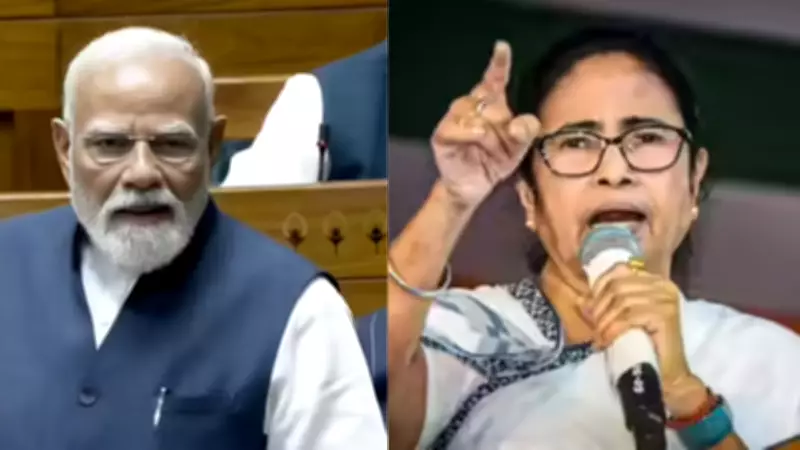
PM Modi's Lok Sabha Address: Delimitation Guarantee and Women's Reservation Push
Prime Minister Narendra Modi delivered a significant address in the Lok Sabha on Thursday, providing crucial assurances regarding the upcoming delimitation exercise while strongly advocating for the women's reservation bill as a national priority.
Delimitation Justice Guaranteed
In his parliamentary speech during a special session, Prime Minister Modi directly addressed concerns that northern states might gain parliamentary seats at the expense of southern states during the delimitation process. The Prime Minister categorically stated, "I give guarantee that no injustice will be done to any state", seeking to allay fears that have been circulating in political circles about potential regional imbalances.
This assurance comes amid ongoing discussions about how the delimitation exercise will be conducted and its implications for political representation across different regions of India. The Prime Minister's statement represents a significant commitment to maintaining fairness in this crucial democratic process.

Women's Reservation as National Priority
Prime Minister Modi characterized the women's reservation bill as a defining moment for India's democracy, emphasizing the importance of greater female representation in policymaking bodies. In a notable gesture toward opposition parties, Modi offered what he described as a "blank cheque" for credit, indicating his willingness to share political recognition for advancing this legislation.
The Prime Minister's strong pitch for women's political empowerment reflects the government's commitment to addressing gender disparities in political representation and creating more inclusive governance structures.
Mamata Banerjee's Election Bomb Allegation
In a separate development with significant political implications, West Bengal Chief Minister Mamata Banerjee made serious allegations against the Bharatiya Janata Party during a campaign rally in Cooch Behar. The Trinamool Congress supremo claimed that "the BJP is planning to plant bombs during the polls and bring the National Investigation Agency for investigation" in reference to upcoming state assembly elections.
These explosive allegations come amid heightened political tensions in West Bengal and represent a significant escalation in campaign rhetoric as election preparations intensify.
India-Austria Strengthen Bilateral Ties
On the diplomatic front, Prime Minister Modi held substantive talks with Austrian Chancellor Christian Stocker at Hyderabad House in New Delhi. The meeting resulted in the signing of multiple Memoranda of Understanding aimed at deepening cooperation between the two nations.
The bilateral discussions focused on several key areas of mutual interest:
- Trade and Investment: Enhancing economic partnerships and business opportunities
- Technology Cooperation: Collaborative initiatives in technological innovation
- Renewable Energy: Joint efforts in sustainable energy development
- Cultural Exchanges: Strengthening people-to-people connections
Chancellor Stocker's four-day visit to India marks his first official trip since assuming office last year, underscoring the importance both nations place on strengthening their bilateral relationship.
Cricket Diplomacy Stalled by Political Factors
Former Indian Premier League chairman Lalit Modi has expressed skepticism about the immediate resumption of bilateral cricket ties between India and Pakistan, citing political interference as the primary obstacle. Modi specifically pointed to what he described as "politicization by Pakistan" through the influence of the Pakistan Cricket Board as preventing progress in restoring cricketing relations between the neighboring nations.
This assessment highlights the continuing challenges in sports diplomacy between India and Pakistan, with cricket serving as both a potential bridge and a reflection of broader political tensions.

The convergence of these developments across political, diplomatic, and sporting spheres illustrates the complex landscape of current affairs in India, with significant implications for domestic governance, international relations, and regional dynamics.





