

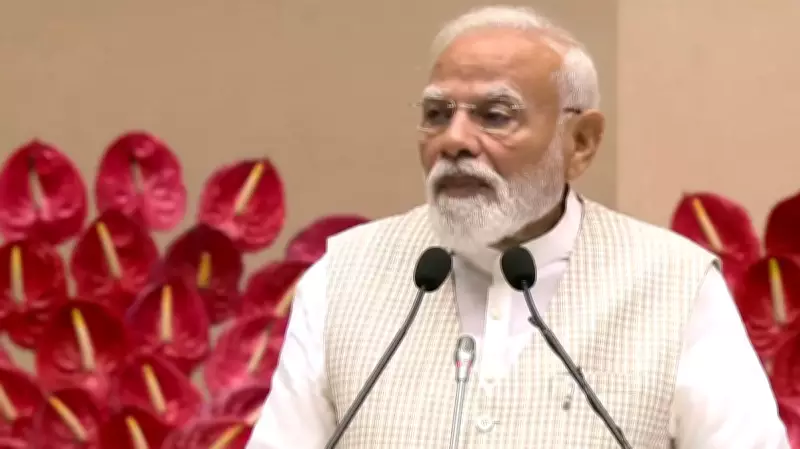
PM Modi Declares Parliament on Verge of Historic Achievement at Women's Empowerment Conference
Prime Minister Narendra Modi delivered a powerful address at the Nari Shakti Vandan Sammelan in Delhi on April 13, 2026, celebrating the legislative progress on the Women's Reservation Bill. In his speech, the Prime Minister highlighted that Parliament is approaching a monumental moment in history with the passage of this crucial amendment.
Emphasis on Collaborative Legislative Process
Speaking to a gathering focused on women's empowerment, PM Modi underscored the significance of the bill's journey through Parliament. He stated that the amendment has been successfully passed due to a spirit of dialogue, extensive cooperation, and broad participation among lawmakers. This collaborative approach, according to the Prime Minister, reflects the democratic ethos of India and ensures that the legislation carries the collective will of the nation.
The Prime Minister emphasized that this legislative achievement is not merely a procedural milestone but a transformative step toward gender equality in political representation. He connected the bill's passage to the broader theme of the Sammelan, which celebrates women's strength and contributions to society.

Context and Implications of the Women's Reservation Bill
The Women's Reservation Bill, which aims to reserve seats for women in Parliament and state legislatures, has been a long-standing demand in Indian politics. Its passage marks a pivotal development in the country's governance framework. PM Modi's remarks at the event positioned this legislative action as a historic correction to historical underrepresentation, aligning with global trends toward inclusive policymaking.
Key aspects of the bill's significance include:
- Enhancing women's participation in decision-making processes at the highest levels of government.
- Fostering a more balanced and representative political landscape across India.
- Inspiring future generations of women leaders through increased visibility and opportunity.
The Prime Minister's address resonated with attendees, who viewed the bill as a concrete step toward realizing the constitutional promise of equality. His comments also served to acknowledge the efforts of various stakeholders, including political parties and civil society groups, who have advocated for this change over decades.
Broader Impact on National Discourse
By framing the bill's passage as a historic achievement, PM Modi linked it to India's ongoing journey toward social and economic empowerment. The Nari Shakti Vandan Sammelan provided a platform to reiterate the government's commitment to women-led development, a theme that has been central to recent policy initiatives. The event underscored how legislative actions, when driven by consensus, can catalyze broader societal transformations.
In conclusion, the Prime Minister's speech at the Sammelan not only celebrated a specific legislative milestone but also reinforced the importance of inclusive governance. As Parliament moves closer to enacting the Women's Reservation Bill, its implications for India's democratic fabric and gender parity remain a focal point of national and international attention.






