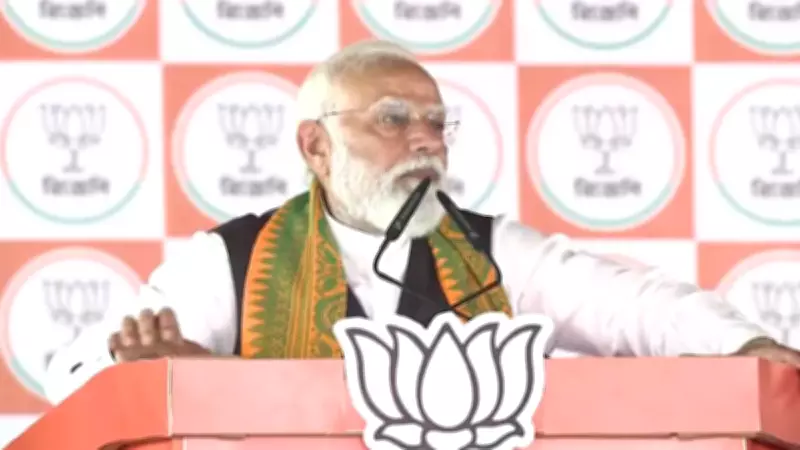
PM Modi Launches Scathing Attack on TMC Over 'Tukde Tukde' Gang Allegations
Prime Minister Narendra Modi has launched a fierce political offensive against the Trinamool Congress (TMC), accusing the ruling party in West Bengal of providing shelter and political patronage to members of the so-called 'Tukde Tukde' gang. In a significant development that has stirred the political landscape, the Prime Minister claimed that these individuals had openly threatened to sever the strategically vital Siliguri Corridor, a narrow stretch of land that connects India's northeastern states to the mainland.
Allegations of Parliamentary Berth for Threat-Makers
During a recent address, PM Modi asserted that the TMC not only harbored these elements but also facilitated their entry into Parliament by granting them berths. This move, according to the Prime Minister, represents a grave compromise on national security and territorial integrity. The Siliguri Corridor, often referred to as the 'Chicken's Neck,' is a critical geographical link, and any disruption could have severe implications for connectivity and defense in the region.
The Prime Minister emphasized that such threats cannot be taken lightly, especially when they come from individuals who have been accommodated within the political framework by a major regional party. He questioned the TMC's commitment to national unity, suggesting that the party's actions were driven by narrow political interests rather than the welfare of the country.

TMC's Response and Political Repercussions
In response to these allegations, TMC leaders have dismissed the claims as baseless and politically motivated, aimed at diverting attention from more pressing issues. They argue that the Prime Minister's statements are part of a larger strategy to undermine the party's influence in West Bengal ahead of upcoming elections. However, the controversy has ignited a heated debate, with opposition parties calling for a thorough investigation into the matter.
The timing of these accusations is particularly noteworthy, as they come amidst heightened political tensions in the state. West Bengal has been a battleground for intense electoral contests, and such allegations could potentially sway public opinion and impact voter sentiment. The 'Tukde Tukde' gang reference, often used in political discourse to describe groups allegedly seeking to fragment the country, adds a layer of emotional and nationalist appeal to the Prime Minister's critique.
Broader Implications for National Security and Politics
Beyond the immediate political sparring, this episode raises important questions about the intersection of security concerns and electoral politics. The Siliguri Corridor's significance cannot be overstated; it is a lifeline for the northeastern states, facilitating trade, movement, and military logistics. Any threat to its integrity is viewed with utmost seriousness by security analysts and policymakers alike.
- The allegations highlight the ongoing tussle between the central government and regional parties over issues of sovereignty and security.
- They also underscore the challenges in balancing political freedoms with national security imperatives in a diverse democracy like India.
- As the debate unfolds, it remains to be seen how this will affect the political dynamics in West Bengal and the broader national landscape.
In conclusion, PM Modi's attack on the TMC over the 'Tukde Tukde' gang and the Siliguri Corridor threat has added a new dimension to the political narrative in West Bengal. With both sides digging in their heels, this controversy is likely to resonate in the corridors of power and among the electorate for some time to come.