

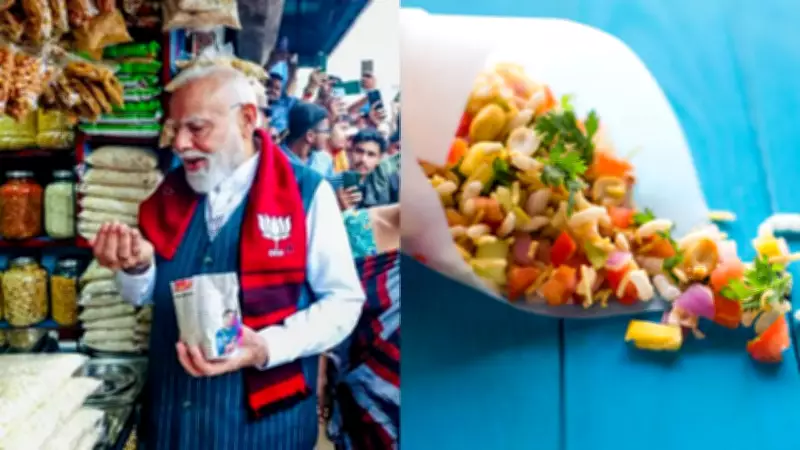
Prime Minister Narendra Modi's Culinary Connection with Local Indian Food
Prime Minister Narendra Modi has consistently demonstrated his vocal support and appreciation for indigenous Indian cuisine. From Moringa Paratha to Khichdi, his affinity for traditional dishes reflects a deep-seated connection with the nation's culinary heritage. During his travels across India, he frequently engages with local food vendors, showcasing his commitment to grassroots interactions and regional flavors.
PM Modi's Jhalmuri Experience in West Bengal
In a recent and notable instance, Prime Minister Modi took a brief pause between four rallies in West Bengal to sample Jhalmuri, a beloved local street snack. This spontaneous stop occurred in Jhargram, where he interacted with a street vendor, capturing the moment on social media.
On Sunday evening, PM Modi posted about this encounter on his official X platform, writing, "In between four rallies across West Bengal on a packed Sunday, had some delicious Jhalmuri in Jhargram." The accompanying video clip shows him requesting the snack from the vendor, saying, "Bhai hamein apna jhalmuri khilao" (Brother, let us have your Jhalmuri).

He further inquired about the price, asking, "Kitne ka hota hai apka acha wala jhalmuri" (How much does your good Jhalmuri cost?), to which the seller replied, "10 ka 20 ka, bus yehi" (10 or 20 rupees, only this). PM Modi smiled and responded, "Jo bhi hai bana do" (Whatever it is, make it).
When he offered payment, the vendor initially declined but accepted after insistence. In a candid moment, the vendor asked if onions should be added, and PM Modi humorously replied, "Haan khate hain, bus dimag nahi khate" (Yes, we eat them, but we don't eat brains), highlighting his down-to-earth demeanor.
What is Jhalmuri?
Jhalmuri is a widely popular snack in India, particularly in Bengal, Bihar, and Jharkhand. Its name derives from "jhal" meaning spicy and "muri" meaning puffed rice, which is the primary ingredient. According to Taste Atlas, this dish is prepared by tossing together selected ingredients in a simple yet flavorful mix.
The key components include:
- Muri or puffed rice
- Roasted peanuts
- Chopped tomatoes, potatoes, cucumbers, and onions
- Spices such as chaat masala and cumin powder
It offers a unique palate kick from raw mustard oil, which helps blend the spices thoroughly with the puffed rice. Typically served in a paper cone called a thonga, Jhalmuri is a staple at street food stalls across regions.
What Makes Jhalmuri a Special Street Snack?
Burst of Flavor: The combination of lemon juice, chaat masala, achar masala, and green chilies provides a vibrant flavor profile that complements the crunchiness of puffed rice, making it a comforting and tasty treat.
Light and Satisfying: As a no-cook snack, Jhalmuri is easy to digest and light on the stomach. Ingredients like puffed rice, peanuts, and chana contribute to its satisfying nature and can support gut health.
Healthy and Nourishing: Low in calories and fat, Jhalmuri is suitable for all age groups, including those preferring lighter meals. Celebrity nutritionist Rujuta Diwekar recommends it as an excellent evening snack for weight management due to its nutritional benefits.
Affordable: In an era where snacks like sandwiches or pakodas often cost Rs 50-60 per plate, Jhalmuri remains accessible at just Rs 10-20 in local markets across many states, making it a budget-friendly option.
Aroma of Raw Mustard Oil: The use of raw mustard oil imparts a pungent, earthy aroma that is distinctive to Bengali cuisine, enhancing the overall sensory experience of this street food.
Prime Minister Modi's interaction with the Jhalmuri vendor not only highlights his personal enjoyment of local delicacies but also underscores the cultural and economic significance of street food in India. This episode reinforces his image as a leader who values and promotes indigenous traditions and small-scale vendors, fostering a sense of national pride in culinary diversity.






