

PMO Directive Restricts Parliamentary Scrutiny of Key National Funds
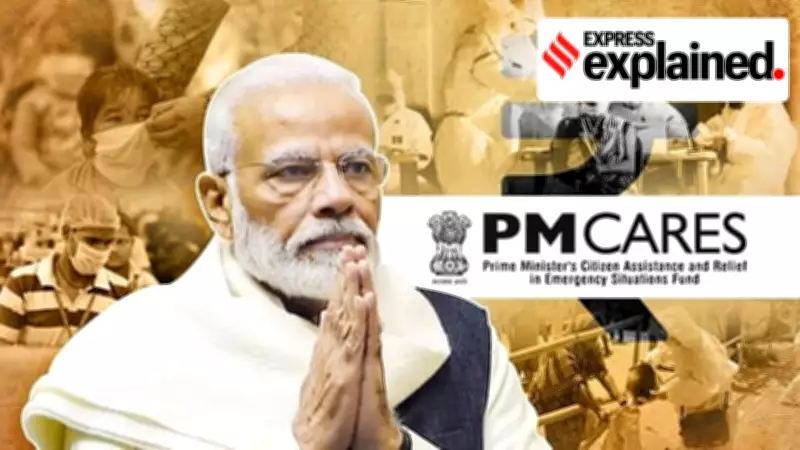
The Prime Minister's Office has issued a significant directive to the Lok Sabha Secretariat, declaring that questions pertaining to the PM CARES Fund, the Prime Minister's National Relief Fund (PMNRF), and the National Defence Fund (NDF) are inadmissible during parliamentary proceedings. This decision, communicated in early February 2026, has ignited a fierce debate about governmental transparency and the fundamental role of legislative oversight in India's democratic framework.
Legal Basis and Parliamentary Procedure
The PMO's position hinges on the argument that these three funds are constituted entirely through voluntary public contributions, rather than allocations from the Consolidated Fund of India. Consequently, the office contends they fall outside the direct purview of government accountability as defined by parliamentary rules.
According to the established Rules of Procedure and Conduct of Business in the Lok Sabha, specifically Rule 41, questions must relate to matters within the special cognizance of the concerned minister and serve a public importance. The PMO has invoked clauses within this rule, notably 41(2)(viii) and 41(2)(xvii), which state that questions shall not relate to matters not primarily the concern of the Government of India or to matters under the control of bodies not primarily responsible to the government.

The final authority on the admissibility of any question rests solely with the Speaker of the Lok Sabha. The Secretariat's role is to process submissions based on the rulebook, after which questions deemed admissible are forwarded to the relevant ministry, allowing 15 days for a formal response.
Understanding the Funds in Question
- PM CARES Fund: Established as a Public Charitable Trust on March 27, 2020, and registered under the Registration Act, 1908, in New Delhi. Its primary mandate is to raise resources for national emergencies, most notably the COVID-19 pandemic.
- Prime Minister's National Relief Fund (PMNRF): Created in 1948 to assist displaced persons following Partition. Its current focus is providing aid to families affected by natural disasters, major accidents, and civil disturbances.
- National Defence Fund (NDF): Dedicated to the welfare of Armed Forces personnel and their dependents, administered by an Executive Committee chaired by the Prime Minister.
Criticism and Concerns Over Accountability
The PMO's preemptive move has drawn sharp criticism from opposition figures and parliamentary experts, who view it as an erosion of legislative checks and balances. Congress MP KC Venugopal expressed deep concern, stating the action undermines the Lok Sabha's independent function to hold the executive accountable through its elected representatives.
Experts highlight the unusual nature of a government body instructing the Secretariat on question admissibility. "The decision over admissibility rests with the Speaker alone. Also, decisions are taken on the merits of the individual question, not entire subjects, like a certain fund," remarked PDT Achary, former Secretary General of the Lok Sabha.
Chakshu Roy of PRS Legislative Research offered a nuanced perspective, noting that while the executive can present its interpretation of these funds' status, "interpreting the nature of these bodies to decide whether they form part of the central government is not the role of the legislature." Such determinations could potentially be challenged in judicial forums.
Transparency and Legal Status
The issue of transparency extends to the Right to Information (RTI) Act. While the NDF is explicitly covered under the RTI Act, the status of both the PM CARES Fund and the PMNRF remains legally contested, with cases pending before the Delhi High Court. The next hearing regarding the PM CARES Fund's transparency obligations is scheduled for April 1.

This development raises profound questions about the boundaries between voluntary charitable trusts and governmental responsibility, especially when such entities are chaired by the highest executive authority and mobilize vast public resources during national crises. The debate underscores a critical tension in democratic governance: balancing efficient administration with robust parliamentary scrutiny and public accountability.





