

Kalyan-Dombivli Healthcare Boom: New Hospitals Amid Public Sector Shortfall
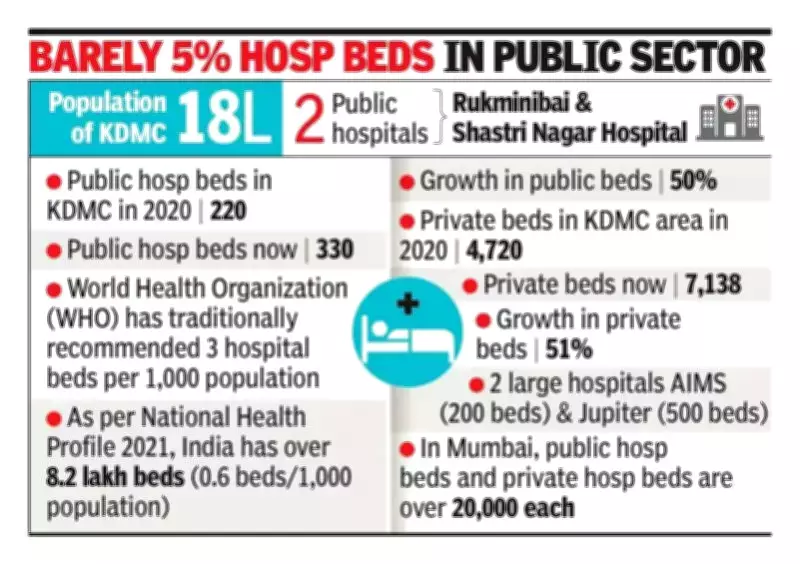
The Kalyan-Dombivli region is experiencing a significant post-Covid surge in healthcare infrastructure, with a 50% increase in hospital beds since 2020. However, this growth is predominantly in the private sector, raising concerns about affordability and accessibility for the area's 1.8 million residents.
Rapid Expansion in Hospital Beds
According to civic public health officials, the total number of hospital beds in the Kalyan-Dombivli belt has jumped from 4,720 before the pandemic to 7,138 as of January. Approximately 1,000 of these are intensive care beds, indicating a focus on critical care services. This expansion is set to continue with two major projects: work on the Kalyan Dombivli Municipal Corporation's (KDMC) 150-bed cancer hospital will soon commence in Dombivli, and a 500-bed corporate hospital is scheduled to open this Saturday.
Public Sector Lagging Behind
Despite the overall increase, the public sector's share remains minimal. In 2020, KDMC's two key hospitals—Shastrinagar Hospital in Dombivli and Rukminibai Hospital in Kalyan—had a combined total of 220 beds. Even with the addition of a maternity hospital at Vasant Valley, the number of beds in KDMC-run facilities has only risen to 330. This means that barely 5% of the total hospital beds in the region are in the affordable public sector, highlighting a stark disparity.

Criticism of Civic Healthcare Services
Umesh Borgaonkar, group leader of Shiv Sena (UBT) in KDMC, has been vocal in his criticism of the civic body's healthcare system. "KDMC may be implementing Smart City projects, but its healthcare system is in poor state," he stated. "The civic hospitals don't have ICU beds. Apart from basic fever treatment, dressings and maternity services, serious treatment facilities are lacking." He added that critical patients are routinely referred to government hospitals in Mumbai or Thane, underscoring the inadequacy of local public facilities.
Private Sector Response and Resident Concerns
The flow of patients from KDMC to other cities has prompted private healthcare providers to step in. Thane's Jupiter Hospital group is establishing a 500-bed multispecialty hospital in Dombivli to address this gap. Dr. Ajay Thakker of Jupiter Hospital emphasized, "In large Indian cities, no one should have to travel more than 45 minutes to get access to high-quality healthcare." This sentiment resonates with residents of KDMC, Ulhasnagar, Ambernath, and Badlapur, who have long faced inadequate healthcare options.
Vinod Mishra, a resident of Kalyan East, pointed out that many multi-specialty hospitals in the region exist "only in name." He noted, "Except for 2 or 3 hospitals, it was difficult to find facilities offering comprehensive treatment under one roof." Mishra added that the presence of established hospital chains could bring pricing discipline among private providers, who often charge high bills without offering corresponding facilities.
KDMC's Efforts and Future Plans
In response to these challenges, KDMC health officer Dr. Deepa Shukla outlined the civic body's current and planned initiatives. KDMC operates three hospitals and two outsourced hospitals, along with 26 primary health centres, 50 wellness centres, and 59 Hindu Hriday Samrat Balasaheb Thackeray Clinics. Efforts are underway to strengthen critical care services, and there are plans to construct a 100-bed multi-specialty hospital at Gauripada in Kalyan. However, Dr. Shukla acknowledged that this project has been delayed due to the absence of a consultant.
The healthcare landscape in Kalyan-Dombivli is at a crossroads, with private sector growth outpacing public investments. While new hospitals promise enhanced services, the need for affordable and accessible public healthcare remains a pressing issue for the region's residents.






