Delhi Court's Excise Policy Verdict Ignites Political Warfare
The political landscape erupted in controversy on Friday as the Delhi excise policy verdict extended far beyond the courtroom, triggering a fierce exchange between the Congress and Aam Aadmi Party (AAP). The Congress launched a scathing attack on the ruling Bharatiya Janata Party (BJP), alleging that Arvind Kejriwal's discharge was strategically timed to influence the upcoming Gujarat and Punjab elections.
Congress Accuses BJP of Political Manipulation
Congress spokesperson Pawan Khera unleashed a blistering critique of the BJP shortly after a Delhi court granted relief to Kejriwal in the alleged liquor scam case. In a social media post, Khera likened the BJP to an "Icchadhari Naag" (shape-shifting serpent) and accused the party of deploying central investigative agencies as "campaign tools" with crucial state elections approaching.
"This is the BJP playbook: vendetta as governance and agencies as campaign tools," Khera declared, describing what he called the ruling party's "obsessive goal" of achieving a "Congress-Mukt Bharat" (Congress-free India).

Khera pointed to what he described as the BJP's "fluctuating relationship" with the Trinamool Congress (TMC) as evidence of political opportunism. "For 12 years they spewed venom at the TMC. And now? Narendra Modi himself is showering it with praise - not out of respect, but to land a cheap blow at Congress," he wrote.
Predictions of Intensified Legal Action Against Congress
The Congress spokesperson made a stark prediction about the immediate political future, warning that cases against Congress leaders would accelerate as elections draw nearer. He specifically cited senior leader P. Chidambaram as an example, noting that the Enforcement Directorate (ED) recently granted prosecution sanction against him in the Aircel Maxis Deal and INX Media cases.
"Elections are coming. So the script is predictable. Cases against Congress leaders will suddenly accelerate - @PChidambaram_IN has already been dragged back into the spotlight because Tamil Nadu is going for polls," Khera asserted in his social media post.
He further alleged that "proceedings against their 'convenient allies' in the AAP and others will quietly vanish in light of the Gujarat and Punjab elections," suggesting a pattern of selective legal action for political advantage.
Kejriwal's Fiery Retort to Congress Criticism
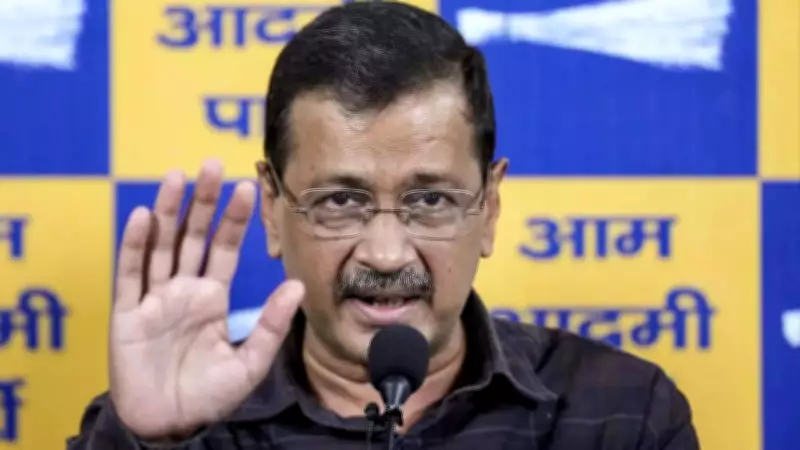
Arvind Kejriwal, who had briefly allied with the Congress ahead of the 2024 general elections, responded with equal ferocity to the Congress remarks. The AAP supremo targeted Pawan Khera directly and accused the Congress of having "no shame" in its political positioning.
"I want to ask the Congress - Kejriwal went to jail. Did Robert Vadra go to jail? Sanjay Singh went to jail. Did Rahul Gandhi go to jail? Sanjay Singh went to jail. Did Sonia Gandhi ji went to jail? What is Congress saying? Does it have no shame?" Kejriwal demanded during his response.
The Delhi Chief Minister drew a sharp contrast between AAP leaders facing incarceration and what he portrayed as the Congress high command remaining outside legal scrutiny, creating a powerful narrative about differential treatment of political opponents.
Court's Detailed Order and Critical Observations
The political exchange followed a comprehensive order from a Special Court in Delhi, which delivered a strongly worded ruling on the CBI case linked to the Delhi Excise Policy 2021-22. Special Judge (PC Act) Jitender Singh of the Rouse Avenue Court held that the prosecution had failed to disclose "even the threshold of a prima facie suspicion, far less the grave suspicion" required for framing charges.
The court declared the prosecution's case to be "legally infirm, unsustainable, and unfit to proceed any further in law." In a particularly significant observation, the judge noted that when the material collected by the agency was tested on admissibility, relevance and probative value, "the appearance of a coherent conspiracy dissolves," exposing the allegations as being founded on inadmissible material and post-facto reconstruction.

Among those discharged in the ruling were Arvind Kejriwal, former deputy chief minister Manish Sisodia, and 21 other individuals connected to the case. The court also expressed serious reservations about the Central Bureau of Investigation's (CBI) reliance on approver statements, cautioning that granting pardon to an accused and then using his testimony to fill gaps in the prosecution's case or implicate additional accused would undermine constitutional safeguards.
Background of the Excise Policy Case
The First Information Report (FIR) in this high-profile case was registered in August 2022 following a complaint by Delhi Lieutenant Governor V.K. Saxena. The complaint alleged that the now-scrapped excise policy was deliberately designed to favor select liquor licensees through mechanisms including reduced license fees and fixed profit margins, resulting in alleged kickbacks and financial losses to the state exchequer.
The political ramifications of the court's decision continue to reverberate across the national landscape, with all major parties positioning themselves strategically ahead of multiple state elections. The exchange highlights the increasingly contentious nature of Indian politics where legal proceedings and electoral calculations have become deeply intertwined, creating complex narratives about justice, vendetta, and political survival.