

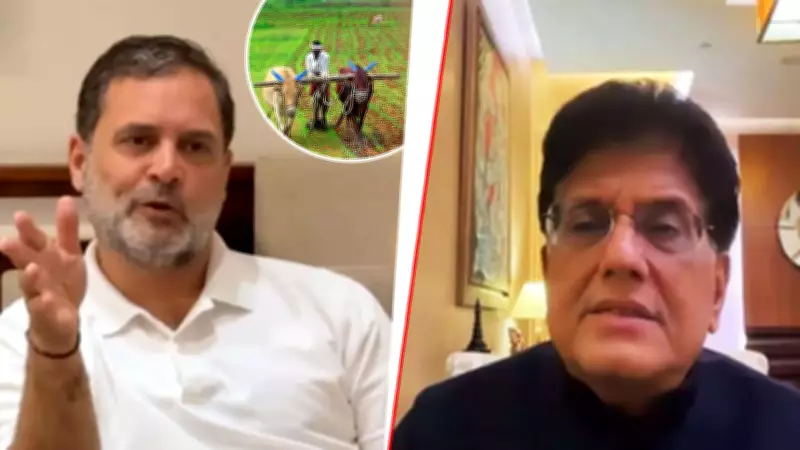
Political Storm Brews Over India-US Trade Agreement and Farmer Concerns
A significant political confrontation has erupted following allegations by Congress leader Rahul Gandhi that the recently negotiated India-US trade deal could potentially harm farmers and compromise the nation's food security. The controversy has drawn sharp responses from key government ministers, setting the stage for a heated debate in the political arena.
Government Ministers Launch Vigorous Defense of Trade Pact
Commerce and Industry Minister Piyush Goyal has categorically dismissed Rahul Gandhi's claims, characterizing them as a carefully orchestrated attempt to mislead the rural population. In a strongly worded rebuttal, Goyal emphasized that the trade agreement includes robust protective measures designed specifically to shield Indian agricultural interests from adverse impacts.
"The agreement incorporates strict import quotas and minimum price mechanisms for sensitive agricultural products including apples and walnuts," Goyal stated, underscoring the government's commitment to protecting domestic producers. He further clarified that no concessions whatsoever have been granted on crucial crops such as soyameal and maize, which are considered particularly sensitive within the agricultural sector.

Agriculture Minister Joins the Fray with Strong Accusations
Agriculture Minister Shivraj Singh Chouhan has entered the political skirmish with equally forceful language, directly accusing Rahul Gandhi of repeatedly disseminating false information and deliberately creating confusion among farming communities. Chouhan's intervention adds substantial weight to the government's defensive position, presenting a united ministerial front against the opposition's criticisms.
The Modi administration maintains that the trade pact represents a carefully calibrated balance between securing enhanced market access for Indian exports abroad and implementing strong protective mechanisms for domestic agricultural producers. This dual approach, according to government officials, ensures that Indian farmers benefit from expanded international opportunities while remaining shielded from potentially disruptive import surges.
Broader Political Implications of the Agricultural Debate
As accusations continue to fly between political factions, the farmer narrative has evolved into the central battleground for a much wider political confrontation. The debate extends beyond mere trade policy specifics to encompass fundamental questions about:
- The government's commitment to agricultural welfare
- The opposition's role in scrutinizing international agreements
- The potential long-term implications for India's food security framework
- The political messaging strategies employed by both major parties
This controversy emerges against a backdrop of heightened political sensitivity regarding agricultural issues, with farming communities representing a crucial electoral constituency across numerous Indian states. The intensity of the exchange suggests that trade policy has become inextricably linked with broader political positioning as parties prepare for upcoming electoral contests.
The government's defensive strategy appears focused on emphasizing the protective elements of the trade agreement while characterizing opposition criticism as politically motivated fearmongering. Meanwhile, the Congress party's approach centers on highlighting potential vulnerabilities within the pact and questioning whether sufficient safeguards exist to protect India's agricultural interests in the long term.
This political clash over the India-US trade agreement demonstrates how international economic negotiations can quickly transform into domestic political battlegrounds, particularly when they intersect with sensitive issues like agricultural welfare and food security. The outcome of this debate may significantly influence public perception of both the government's trade negotiation capabilities and the opposition's policy scrutiny effectiveness.






