

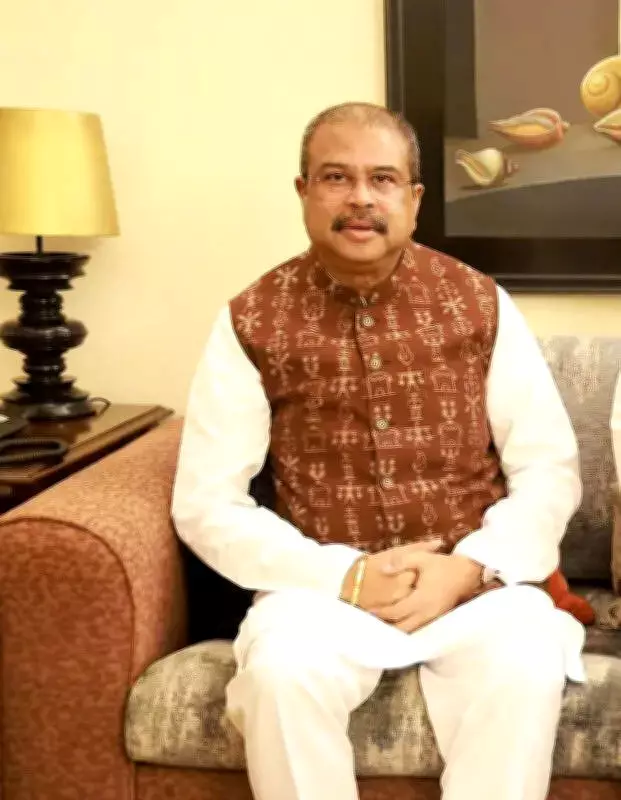
Political Showdown in Odisha Over Parliamentary Representation
A significant political confrontation has erupted in Odisha between Union Minister Dharmendra Pradhan and the ruling Biju Janata Dal (BJD) regarding the potential effects of the proposed delimitation exercise and the women's reservation bill on the state's parliamentary representation. The debate centers on whether Odisha stands to gain or lose seats in the Lok Sabha, with both sides presenting conflicting arguments.
Pradhan's Assertion: Odisha to Gain Substantially
On Sunday, Dharmendra Pradhan expressed surprise and disappointment over reported apprehensions from BJD leader and former Chief Minister Naveen Patnaik concerning Odisha's future representation in Parliament. In a detailed post on social media platform X, Pradhan questioned why Patnaik would express fear and surprise when, according to him, Odisha is poised to benefit significantly from the proposed increase in Lok Sabha seats.
Pradhan labeled Patnaik's remarks as "baseless and ridiculous," emphasizing that the National Democratic Alliance (NDA) government, under Prime Minister Narendra Modi, has taken historic steps to strengthen democratic representation. He highlighted the government's commitment to ensuring 33% reservation for women in both Parliament and state assemblies as a landmark achievement.

The Union Minister referenced the debate on the 131st Constitutional Amendment Bill held on April 16 and 17, where Union Home Minister Amit Shah reportedly stated that the representation of all states would increase by nearly 50%. Based on this, Pradhan claimed that Odisha's current Lok Sabha strength of 21 seats could potentially rise to 32 seats.
"This increase would create opportunities for at least 11 women Members of Parliament from Odisha," Pradhan asserted. He urged opposition leaders, including Patnaik, to rely on truth-based facts and avoid spreading confusion among the public. "Truth-based facts are expected from a person like Naveen Babu," he added, calling for responsible discourse.
BJD's Counter: Accusations of Misleading Claims
In a swift rebuttal, the BJD accused Dharmendra Pradhan of misleading the people of Odisha. Party spokesperson Lenin Mohanty challenged Pradhan's assertions, pointing out that as a four-term MP, Pradhan should be well-versed in parliamentary procedures and the legal standing of statements made during debates.
Mohanty argued that verbal assurances given during parliamentary discussions hold no legal weight unless they are explicitly incorporated into the bill's text. He stated categorically, "Not once did the Home Minister say Odisha's Lok Sabha seats would go up from 21 to 32." This, according to the BJD, undermines Pradhan's claims and suggests that the potential seat increase is not guaranteed.
The BJD's position is that without concrete provisions in the legislation, any promises about seat allocation remain speculative. They emphasize the need for clarity and legal certainty before making such projections to the public.
Broader Implications for Odisha's Political Landscape
This face-off highlights the high stakes involved in the delimitation exercise and the implementation of women's reservation. The outcome could reshape Odisha's political dynamics, influencing electoral strategies and representation in the national legislature.
- Potential Seat Increase: If Pradhan's claims materialize, Odisha could see a substantial boost in its parliamentary voice, with more seats translating to greater influence in national decision-making.
- Women's Representation: The reservation bill aims to empower women politically, and Odisha could emerge as a significant contributor to this goal if the seat increase occurs.
- Political Rivalry: The exchange underscores the ongoing tension between the BJP and BJD in Odisha, with both parties vying for public trust on critical issues of governance and representation.
As the debate continues, the people of Odisha await clearer details on how these proposed changes will impact their state. The need for transparent communication and factual accuracy remains paramount to avoid misinformation and ensure informed public discourse.






