

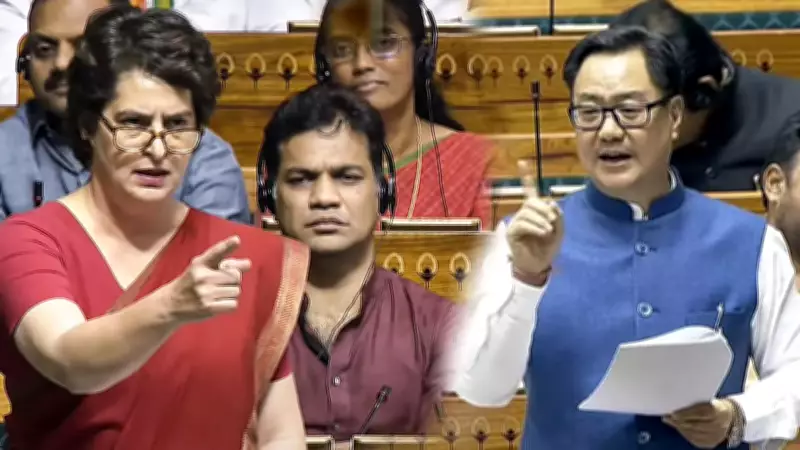
Congress Leader Priyanka Gandhi Vadra Delivers Strong Rebuttal to Rijiju's Parliamentary Remarks
The Lok Sabha witnessed a heated exchange on Monday as Parliamentary Affairs Minister Kiren Rijiju invoked a memorable political moment to criticize Leader of the Opposition Rahul Gandhi. During the debate on the motion against Speaker Om Birla, Rijiju recalled the 2018 incident where Rahul Gandhi crossed the aisle to hug Prime Minister Narendra Modi and subsequently winked at fellow Members of Parliament.
Rijiju Questions Rahul Gandhi's Parliamentary Conduct
Minister Kiren Rijiju utilized this historical reference to cast doubt on Rahul Gandhi's seriousness and commitment to proper parliamentary decorum. "There's only one leader who..." Rijiju began, before detailing the hug and wink episode that occurred eight years prior. His comments were clearly aimed at undermining the opposition leader's credibility during a crucial legislative discussion.
Priyanka Gandhi's Forceful Counter-Attack
The remarks prompted an immediate and vigorous response from Congress MP Priyanka Gandhi Vadra. She asserted that the ruling party consistently struggles to accept Rahul Gandhi's substantive criticism precisely because he steadfastly refuses to bow before power or authority. "The problem isn't with Rahul's conduct, but with those who cannot tolerate dissent from someone who won't submit to their dominance," Priyanka Gandhi declared, adding significant drama to an already tense parliamentary session.

Context of the Parliamentary Debate
This verbal clash occurred during discussions concerning the motion against Lok Sabha Speaker Om Birla, amplifying the political tensions within the chamber. The 2018 hug incident has frequently resurfaced in Indian political discourse, with various interpretations offered by different factions. Rijiju's decision to reference it during official proceedings represents a strategic attempt to frame the opposition's behavior, while Priyanka Gandhi's retort framed it as evidence of the ruling party's intolerance toward principled opposition.
The exchange highlights the ongoing political polarization and the personal nature of contemporary parliamentary debates in India. Both sides appear to be using historical moments as weapons in current political battles, with the 2018 episode serving as a recurring symbol in these conflicts.






