

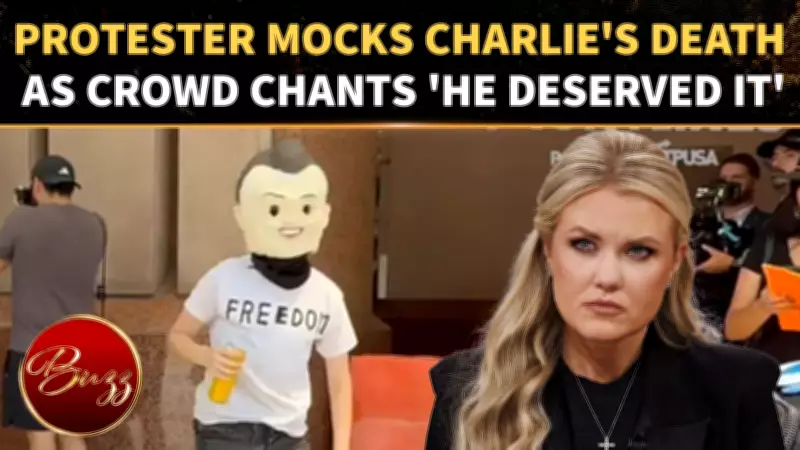
A shocking protest at a Turning Point USA event has sparked widespread outrage after a demonstrator dressed as Charlie Kirk appeared to reenact the conservative activist's assassination. The incident unfolded at a summit hosted by Charlie Kirk's widow, Erika Kirk, in Texas, as protesters clashed with attendees and controversial chants echoed through the venue.
The Viral Incident
Footage circulating online captures a protester wearing a mask resembling Charlie Kirk, who then simulates being shot and falling to the ground. The reenactment took place just outside the event hall, where Erika Kirk was speaking about her late husband's legacy. Witnesses reported that the protester was accompanied by others holding signs with inflammatory slogans.
Outrage and Debate
The video has ignited heated debate on social media, with many condemning the stunt as a disrespectful and dangerous escalation of political protest. Critics argue that mocking a slain figure crosses a line, while some defend it as protected free speech. Erika Kirk has not yet commented publicly, but Turning Point USA released a statement calling the act "despicable and cowardly."

Context of the Protest
The protest was part of a larger demonstration against Turning Point USA, a conservative youth organization. Attendees at the summit included prominent right-wing figures, and security was heightened due to prior threats. This incident comes amid rising political tensions in the United States, where protests have occasionally turned violent.
Legal and Social Implications
Legal experts are divided on whether the reenactment constitutes a crime. While it may fall under protected speech, some argue it could be considered harassment or incitement. The local police have launched an investigation, but no arrests have been made so far. The incident also raises questions about the limits of political expression in a polarized society.
As the video continues to go viral, it underscores the deep divisions in American politics and the challenges of maintaining civility in public discourse. The debate over this stunt is likely to persist, reflecting broader conflicts over free speech, respect for victims, and the boundaries of protest.






