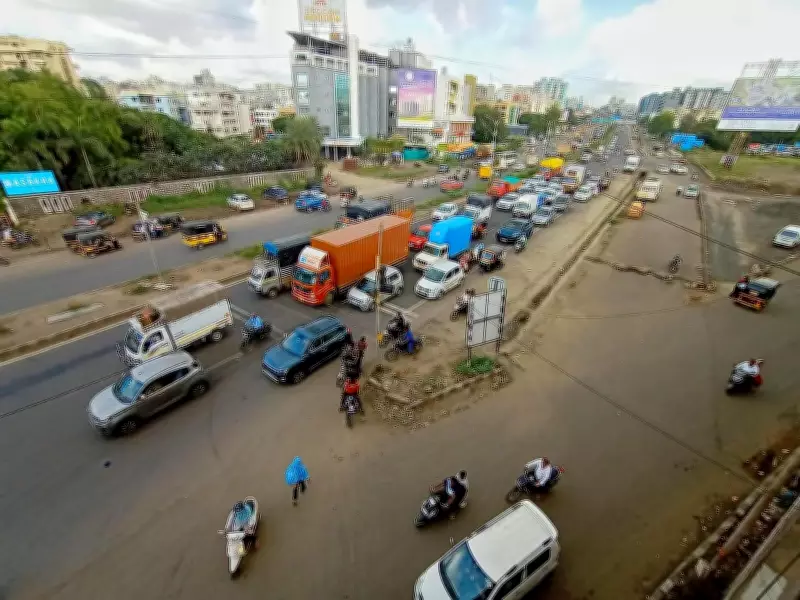
Pune: Following yet another accident involving a heavy vehicle in the risk-prone Navale Bridge area on Monday, which resulted in one fatality, attention has once again turned to the delayed implementation of relief measures on this stretch. The long-pending traffic bottleneck at the junction on NH-48 was to be addressed with a proposed 32.27-km elevated corridor between Ravet and Narhe. The National Highways Authority of India (NHAI) has already submitted the detailed project report (DPR) to the Centre. Officials stated on Wednesday that the project continues to await approval from the Union Cabinet.
Estimated to cost over Rs 6,090 crore, the elevated corridor has been designed to ease congestion along one of Pune’s most overloaded highway stretches. Commuters currently face delays of 45–60 minutes, and speeds often drop below 20 kmph during peak hours, especially around Navale Bridge, a key choke point.
Safety Features in Focus
Safety has been a central design focus of the project. The corridor includes crash barriers, parapet walls, reflective signage, lane markings, high-mast lighting, drainage systems, surveillance provisions, and emergency response facilities. Special attention has been given to monsoon resilience, including measures to address waterlogging-prone stretches along the existing highway.

During construction, detailed traffic management plans will be mandatory. These include barricading of work zones, phased diversions, speed restrictions near construction sites, traffic marshals, illuminated work zones, and continuous monitoring to ensure commuter safety. Provisions for uninterrupted movement of emergency vehicles such as ambulances and fire services will be maintained at all times.
Expert Recommendations and Phasing
The Pune district collector-appointed IIT Delhi team is expected to submit its recommendations on the proposal. The project is planned in two phases: a 16.4-km stretch from Jambulwadi to Sutarwadi and a 15.87-km section from Sutarwadi to Dehu Road Junction. This will provide a continuous elevated high-speed corridor along NH-48, a critical part of the Mumbai–Pune–Bengaluru highway network.
Officials said the corridor will segregate long-distance and freight traffic from local urban movement, directly reducing pressure at congested nodes such as Navale Bridge Junction, Bhumkar Chowk, and Wakad-Hinjewadi Cross Road. It will also improve connectivity to major traffic generators including Hinjewadi IT Park, Bhosari MIDC, and the Chakan industrial belt.
Key Infrastructure Details
The six-lane (3+3) divided corridor includes major ramps and flyovers at key junctions, including Navale Junction up and down ramps, grade-separated structures at Bhumkar Chowk, Hinjewadi-Wakad Cross Road improvements, Dehu Road Junction upgrades, and connectivity links near Kiwale and the Mumbai Expressway interchange.
According to the DPR, once operational, the corridor is expected to increase average speeds to around 80 kmph and reduce travel time by 30–40%. It will also lower vehicle operating costs, fuel consumption, and emissions across the corridor.