

Punjab Governor's Anti-Drug Yatra Ignites Political Firestorm Over SAD-BJP Presence
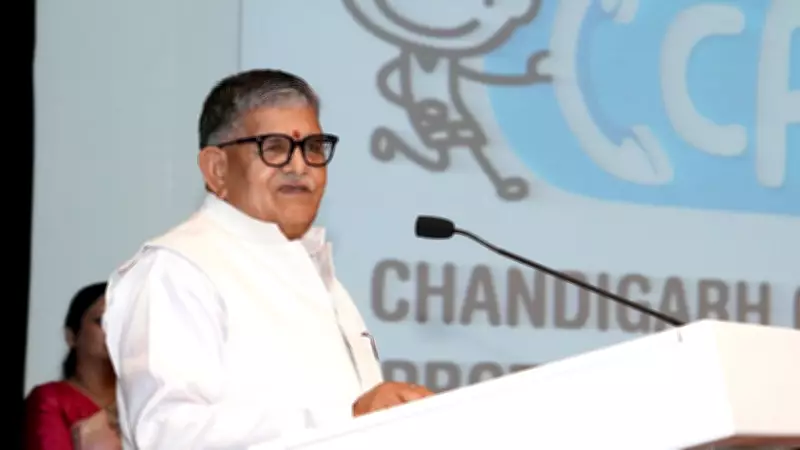
Punjab Governor Gulab Chand Kataria's four-day "Nasha Mukti Yatra", launched on February 9 from Tarn Taran and set to conclude in Abohar, has escalated into a major political controversy in the state. Despite being promoted as a social initiative against drug abuse under the banner "Yuddh Nashyan Viruddh", the yatra has drawn sharp criticism from ruling and opposition parties, particularly over the involvement of Shiromani Akali Dal (SAD) and Bharatiya Janata Party (BJP) leaders.
Political Optics Trigger AAP and Congress Boycott
The Ferozepur leg of the yatra on Tuesday became a focal point of contention when senior BJP and SAD figures joined Governor Kataria. Punjab BJP working president Ashwani Sharma and BJP national executive member Rana Gurmeet Singh Sodhi participated in the march, while SAD chief Sukhbir Badal later arrived at the Ferozepur School of Eminence, where Kataria briefly paused his speech to welcome him from the dais. This moment quickly fueled political debates, contrasting with the absence of AAP and Congress representatives.
All four AAP MLAs from Ferozepur skipped the yatra on Tuesday, and three AAP MLAs from Fazilka district stayed away during its Fazilka leg on Wednesday. Similarly, Congress Ferozepur MP Sher Singh Ghubhaya, whose constituency includes Ferozepur and Fazilka, did not attend any Governor's events.

Parties Exchange Accusations Over Drug-Fighting Sincerity
Punjab Congress president Amarinder Singh Raja Warring launched a scathing attack, questioning the Governor's motives. He suggested the yatra might be an attempt to revive the SAD ahead of the 2027 Assembly polls and lay groundwork for a renewed Akali-BJP alliance, which dissolved during the 2020-21 farmers' movement. Warring emphasized that visuals of the Governor with Badal conveyed an "obvious political message" and raised concerns about cross-border drug smuggling discussions with the Union Home Ministry.
AAP spokesperson Kuldeep Singh Dhaliwal echoed these criticisms, asserting that the fight against drugs must be "sincere and people-centric, not symbolic or politically driven". He alleged that SAD and BJP were responsible for the spread of drug abuse during their previous regimes and argued that their participation undermined the campaign's credibility.
Governor and SAD-BJP Defend the Initiative
Governor Kataria defended his yatra on Wednesday, recalling his earlier efforts, including a visit to Fazilka in July 2024 where women from Village Defence Committees urged action against drugs. He noted organizing marches in December 2024 and April 2025, and stated he personally invited Chief Minister Bhagwant Mann, state ministers, religious leaders, and organizations to join this social cause. Sources indicated that Lok Bhavan had extended invitations to sitting and former MLAs, MPs, NGOs, and Village Defence Committees across districts.
SAD spokesperson Daljeet Singh Cheema defended his party's participation, arguing that the Governor represents the entire state and invitations from Lok Bhavan should be respected. He criticized AAP and Congress for politicizing the issue after abstaining, pointing out that political leaders typically attend all-party meetings called by the Chief Minister.
BJP working president Ashwani Sharma responded by questioning AAP's commitment, stating, "Rather than explaining why AAP MLAs themselves stayed away from a Governor's event, they are raising fingers against others. This shows how serious they are against drugs." He urged AAP and Congress to respect the constitutional post of Governor.
Yatra Conclusion and Ongoing Political Implications
The yatra is scheduled to conclude in Abohar on Thursday, where Sandeep Jakhar, a suspended Congress MLA and nephew of state BJP president Sunil Jakhar, is expected to attend. This event continues to highlight deep political divisions in Punjab, with the anti-drug campaign becoming a battleground for electoral strategies and alliance dynamics, overshadowing its intended social message.






