Punjab's mining revenue has doubled to nearly ₹600 crore during the 2025-26 financial year, up from approximately ₹300 crore in the previous year. Nearly one-fourth of this total, about ₹150 crore, was generated through a border infrastructure cess imposed on mining material entering the state from neighbouring Himachal Pradesh and Haryana, according to senior officials in the Punjab mining department.
Border Cess: Himachal Contributes 75% of Collections
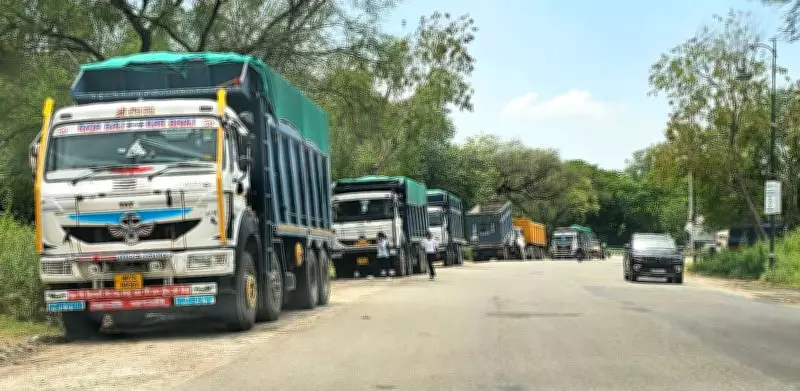
Officials, speaking on condition of anonymity, revealed that around 75% of the cess revenue came from material entering Punjab from Himachal Pradesh, making it the single largest contributor. The department now collects between ₹40 lakh and ₹45 lakh per day through the infrastructure cess at border check posts, with ₹30 lakh to ₹35 lakh daily coming from vehicles carrying mining material from Himachal Pradesh.
The infrastructure cess of ₹3,000 per tipper was introduced after the department faced difficulties verifying the source of mining material entering Punjab. Substantial quantities of sand, gravel and crusher material were entering from adjoining states, but there was often no mechanism to determine whether the minerals had been extracted legally or through illegal mining operations, officials said.

Structured Taxation and Monitoring Framework
The cess has enabled the government to bring all incoming mining material under a structured taxation and monitoring framework. Revenue generated is being used to strengthen surveillance infrastructure, set up digital monitoring systems and improve software-based tracking of mineral transportation across the state, an official said on condition of anonymity.
However, the figures also highlight the scale of the mining economy operating along the Punjab-Himachal border, where illegal mining has remained a persistent challenge for enforcement agencies. Riverbeds and seasonal rivulets along the inter-state boundary have long been vulnerable to unauthorised extraction, with mining vehicles frequently transporting material into Punjab for processing and sale.
Limited Powers to Verify Legality in Neighbouring States
Officials admitted that while Punjab can regulate the movement of mineral material entering the state, it has limited powers to verify whether the material was extracted legally in the neighbouring state. The continuing concerns over illegal mining are also linked to the large amount of unaccounted money generated through the trade.
Enforcement agencies have in the past unearthed cases where illegal mining proceeds were allegedly laundered through fake GST invoices, bogus mining slips and shell transactions. Investigations have also revealed instances where operators allegedly maintained parallel cash transactions outside the official royalty system.
Cash-Driven Illegal Economy and Digital Tracking
In one such investigation, statements recorded by enforcement agencies indicated that crusher operators allegedly collected royalty payments in cash while fake documentation was used to legitimise illegally mined material. Such cases highlighted how illegal mining not only led to loss of government revenue but also generated substantial unaccounted cash, which was later routed through fraudulent financial transactions.
Officials said strengthening digital tracking of mining vehicles, integrating check-post surveillance and expanding online verification systems are aimed at reducing this cash-driven illegal economy by ensuring better traceability of mineral transportation.
Comparison with Himachal's Mining Revenue
Interestingly, Punjab's earnings of around ₹150 crore through the border infrastructure cess alone are nearly half of the approximately ₹300 crore annual mining revenue of the Himachal Pradesh government. Officials believe the figures reflect the enormous volume of mining material moving across the Punjab-Himachal border.