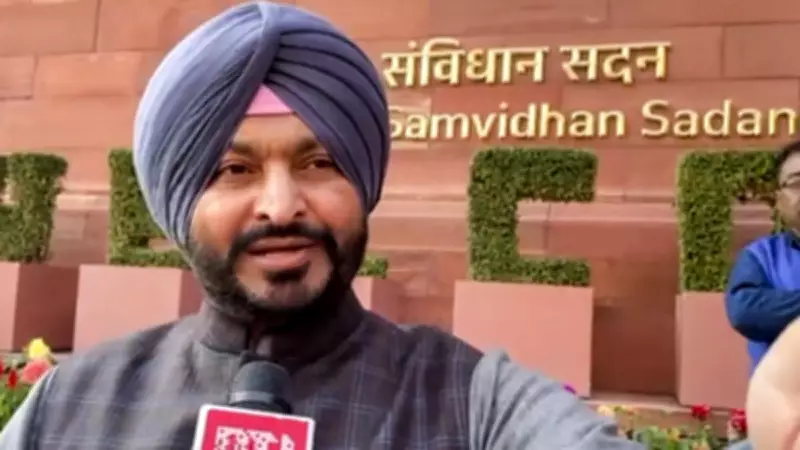
Union Minister Ravneet Singh Bittu has strongly criticized attempts to selectively rewrite Punjab's history, stating that the state's painful past cannot be edited to suit any narrative. His remarks come amid the ongoing 'Satluj' row, which has sparked debates over historical interpretation and regional identity.
Bittu's Statement on Historical Integrity
Speaking on the issue, Bittu asserted, 'Punjab's history cannot be rewritten through selective storytelling. Truth must prevail over propaganda, facts over fiction, and evidence over emotion.' He emphasized that any distortion of historical events would be an injustice to the sacrifices made by the people of Punjab.
The minister's comments reflect growing concerns over attempts to manipulate historical records for political or ideological purposes. He urged all stakeholders to rely on documented evidence rather than unverified claims.

The 'Satluj' Row and Its Context
The 'Satluj' row refers to a dispute over the historical and cultural significance of the Satluj River in Punjab's heritage. Some narratives have sought to downplay or alter the river's role in the region's history, leading to objections from historians and political leaders.
Bittu's intervention highlights the broader issue of historical revisionism in India, where competing narratives often clash over events from the past. He called for a fact-based approach to preserve the authenticity of Punjab's legacy.
Reactions and Implications
The minister's statement has drawn support from various quarters, including academicians and civil society groups, who argue that historical accuracy must be maintained. Critics of selective storytelling have warned that such practices could deepen communal or regional divides.
As the debate continues, Bittu's firm stance underscores the importance of evidence-based discourse in shaping public understanding of history. He reiterated that 'truth must prevail' and called for collective efforts to safeguard Punjab's heritage.