

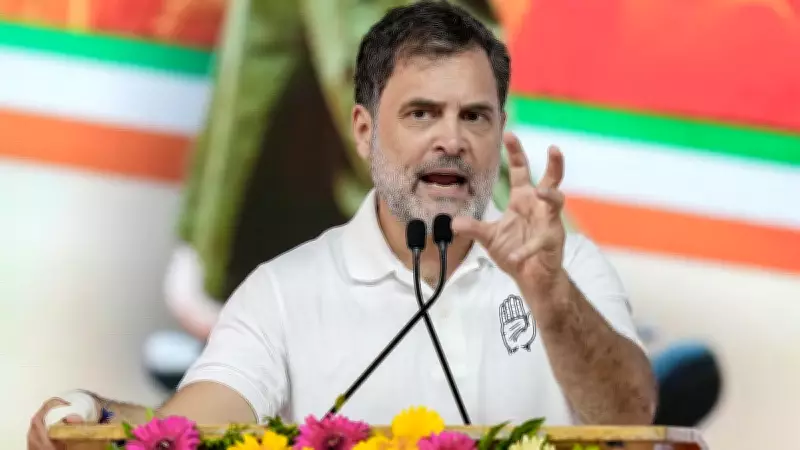
Rahul Gandhi Slams AIADMK for Alleged BJP Surrender at Kanniyakumari Rally
In a fiery election rally held in Kanniyakumari, Congress leader Rahul Gandhi launched a scathing attack on the AIADMK, accusing its leadership of having "surrendered" to the Bharatiya Janata Party (BJP). The event, which took place on April 20, 2026, was part of the campaign buildup for the upcoming Tamil Nadu Assembly Elections 2026.
Allegations of Political Capitulation
Gandhi asserted that the AIADMK, once a dominant force in Tamil Nadu politics, has now become "a vehicle for BJP's entry into the state". He emphasized that this alleged surrender undermines the regional autonomy and cultural identity of Tamil Nadu, suggesting that the BJP is leveraging the AIADMK to expand its footprint in the southern region.
The Congress leader's remarks come at a critical juncture, as political parties gear up for the state elections. He highlighted concerns over the BJP's growing influence, warning that it could alter the political landscape of Tamil Nadu, which has historically been resistant to national party dominance.

Context of the 2026 Assembly Elections
The Tamil Nadu Assembly Elections 2026 are poised to be a significant battleground, with key issues including:
- Regional pride and autonomy
- Economic development and job creation
- Social welfare schemes
- The role of national parties in state politics
Gandhi's allegations reflect the intense competition and strategic alliances shaping the election narrative. By framing the AIADMK as subservient to the BJP, he aims to rally support for the Congress and its allies, positioning them as defenders of Tamil Nadu's distinct political ethos.
Implications for Tamil Nadu Politics
This development could have far-reaching consequences:
- It may polarize voters, with some viewing the AIADMK-BJP alliance as a threat to regional interests.
- It could galvanize opposition forces to unite against perceived external interference.
- The allegations might influence public perception, potentially swaying undecided voters in the run-up to the elections.
As the campaign intensifies, such accusations are likely to dominate political discourse, with parties vying to frame the narrative in their favor. The outcome of the 2026 elections will be closely watched, as it could signal shifts in Tamil Nadu's political dynamics and its relationship with national parties.






