

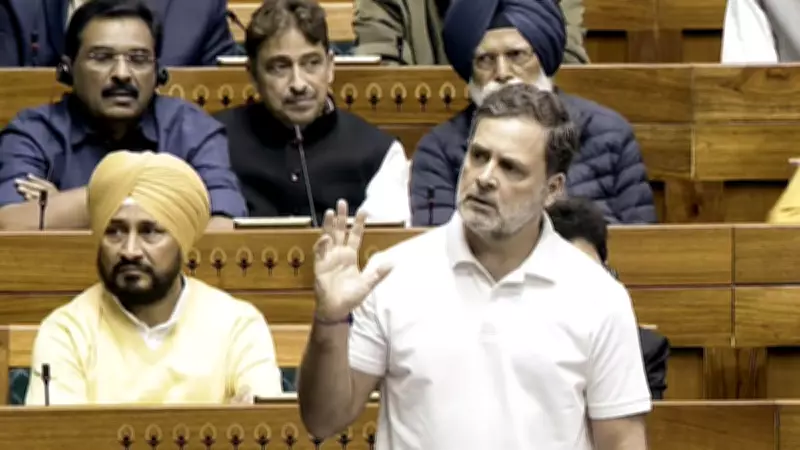
Rahul Gandhi Launches Scathing Attack on Modi Government Over India-US Trade Agreement
Congress leader Rahul Gandhi has launched a fierce political assault on the Narendra Modi-led government, sharply criticizing a recently negotiated trade deal with the United States. In a strongly worded statement, Gandhi accused the administration of compromising national interests, posing a direct and provocative question: "Are you not ashamed of selling India?"
Allegations of a 'One-Sided' Agreement Detrimental to Domestic Sectors
Gandhi's primary contention centers on the perceived imbalance of the trade pact. He asserted that the terms of the agreement are disproportionately favorable to the United States, potentially placing key Indian economic sectors at a severe disadvantage. The Congress leader specifically highlighted the looming negative impact on Indian farmers and the domestic textile industry, two pillars of the nation's economy that employ millions.
His criticism suggests that the deal, in its current form, could expose these vulnerable sectors to heightened foreign competition without adequate safeguards, threatening livelihoods and economic stability. This framing positions the agreement not just as a trade policy but as a matter of national sovereignty and the welfare of common citizens.

Political Repercussions and the Accusation of 'Selling Out'
The use of the phrase "selling India" elevates the critique from standard political opposition to a charge of profound betrayal. This rhetoric is designed to resonate with nationalist sentiments and question the government's commitment to protecting domestic interests in international negotiations.
Gandhi's remarks, made in February 2026, are likely to intensify the political debate surrounding India's foreign trade strategy. They frame the Modi government's approach as one that prioritizes international diplomacy and deals over the economic security of its own agricultural and industrial workforce. The attack underscores a significant fault line in Indian politics regarding globalization and economic policy.
As the details of the trade deal come under greater public and parliamentary scrutiny, this criticism from a key opposition figure sets the stage for a heated national discussion on the balance between global engagement and domestic protectionism.






