

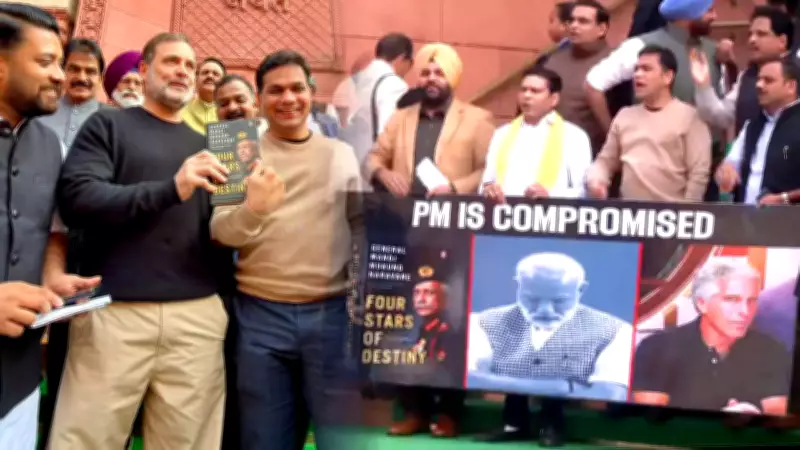
Political Storm Erupts in Parliament as Rahul Gandhi and Ravneet Bittu Clash
A sharp and intense political war has erupted in India's Parliament during the ongoing Budget Session, creating significant turmoil in the legislative proceedings. The confrontation was triggered by Rahul Gandhi's controversial remark targeting Union Minister Ravneet Bittu, whom he described as a 'traitor friend.' This statement immediately sparked an explosive exchange between the two political figures, highlighting the deepening divide between the government and opposition parties.
Heated Exchange and Personal Tensions Surface
Ravneet Bittu launched a strong counterattack against Rahul Gandhi, labeling him a 'desh ke dushman' (enemy of the nation). This verbal duel reflects not just political disagreements but also personal animosities that have spilled into the national political arena. Reports indicate that Bittu refused to shake hands with Rahul Gandhi, further emphasizing the strained relations between the two leaders. Such personal tensions have now become a focal point in parliamentary discussions, overshadowing legislative business.
Opposition Demands PM Modi's Response on Critical Issues
The opposition, led by the Congress party, is now demanding a direct response from Prime Minister Narendra Modi on several critical issues. These include pressing matters of national security and trade policy, which have become central to the political debate. Rahul Gandhi has accused the government of deliberately blocking his speech in Parliament, preventing him from addressing these concerns effectively. He has also cited claims from former Army Chief General Manoj Naravane's book regarding decision-making processes during the China border crisis, adding another layer to the security discourse.

Suspension of MPs and Escalation of Confrontation
The political confrontation has escalated further with the suspension of eight opposition Members of Parliament. This move has intensified the standoff, with opposition parties condemning it as an attempt to stifle democratic debate. The suspensions have raised serious questions about parliamentary accountability and the functioning of democratic institutions in India. The opposition views this action as part of a broader pattern of suppressing dissent within the legislative framework.
Priyanka Gandhi Links Government to Epstein Files Controversy
Adding fuel to the political fire, Priyanka Gandhi has launched a fresh attack by linking the government to the Epstein Files controversy. This allegation has introduced a new dimension to the political discourse, potentially implicating high-level figures in international scandals. The Epstein Files, which contain details about the late financier Jeffrey Epstein's associates, have global ramifications, and their mention in Indian politics underscores the interconnected nature of contemporary political issues.
Growing Political Polarization and Democratic Concerns
These developments collectively underline the growing political polarization in India. The sharp exchanges and personal accusations reflect a deepening rift between the ruling party and the opposition. This situation raises fundamental questions about the state of democratic debate and parliamentary accountability in the country. As political tensions continue to mount, the ability of Parliament to function effectively and address national issues is being critically examined.
The ongoing Budget Session, which is typically focused on economic policies and fiscal planning, has been overshadowed by these political clashes. This diversion from substantive legislative work highlights the challenges facing India's democratic institutions in maintaining decorum and productivity. The coming days will be crucial in determining whether political parties can navigate these tensions and refocus on governance and policy-making.






